
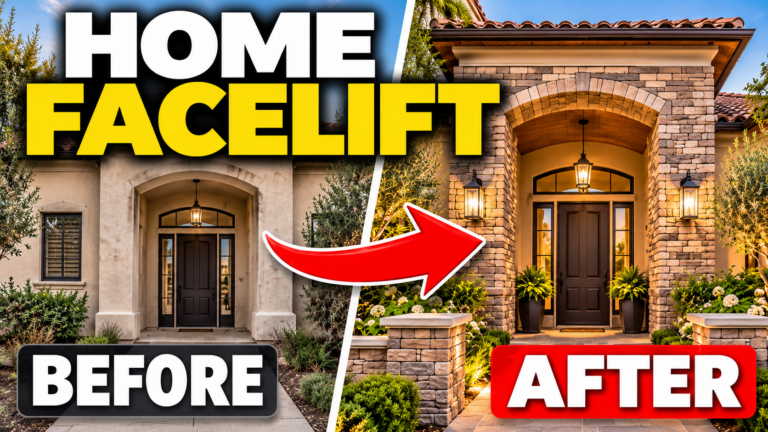
A stone accent can change how a home looks from the street. But manufactured stone veneer involves more than choosing a color and covering an exterior wall.
For homeowners in Irvine, Newport Beach, and surrounding Orange County communities, the decision involves architectural style, installation quality, moisture protection, HOA approval, and cost. If you’re planning to sell, there’s another consideration: Will the improvement make sense for your particular property and its likely buyers?
Manufactured stone veneer may be attractive. It isn’t necessarily right for every home.
Written by Tony Babarino, Irvine Real Estate Broker and REALTOR® with REAL Broker, serving Irvine, Newport Beach, and surrounding Orange County communities. California DRE#01717758.
What Is Manufactured Stone Veneer?
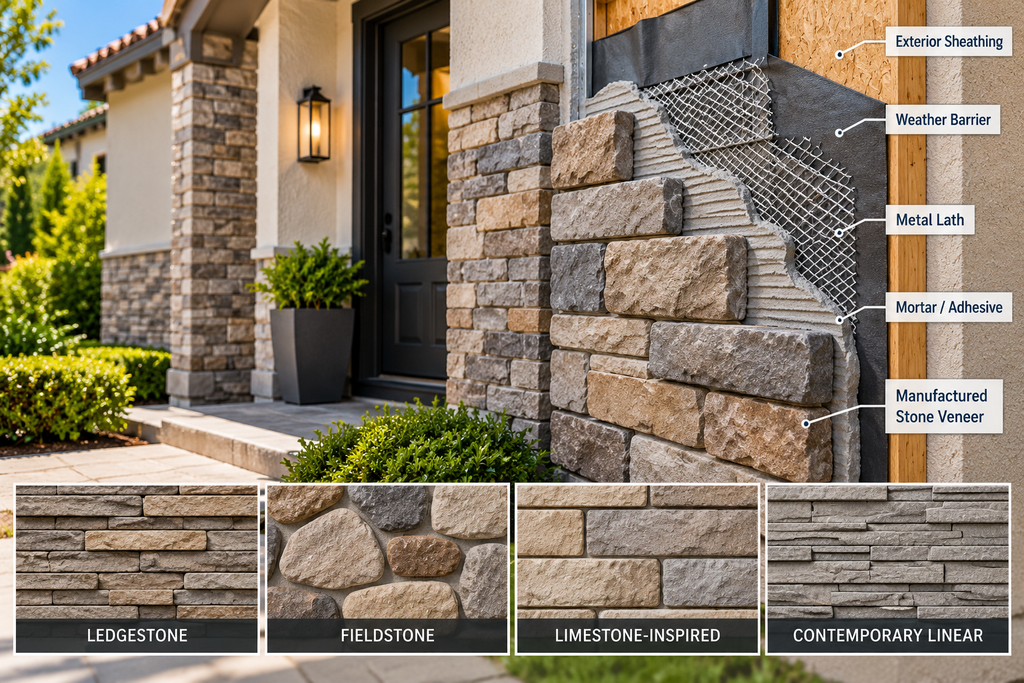
Manufactured stone veneer is a decorative material designed to resemble natural stone. Many products use cement-based mixtures molded, textured, and colored to imitate quarried stone.
Unlike structural masonry, adhered manufactured stone veneer is not intended to support a building. Styles include ledgestone, fieldstone, limestone-inspired profiles, and contemporary linear designs.
It’s generally lighter than full-bed natural stone, but the supporting wall, moisture protection, attachments, and installation method still need evaluation. Manufactured veneer also differs from thin-cut natural stone, though some installation techniques are similar.
Before choosing a product, review its stated application, installation instructions, compatible wall systems, and warranty. A material intended for an indoor accent wall may have different requirements from one installed on a home’s exterior.
Where Can Manufactured Stone Look Good on a Home?
A limited stone accent can sometimes make a greater visual difference than covering an entire exterior.
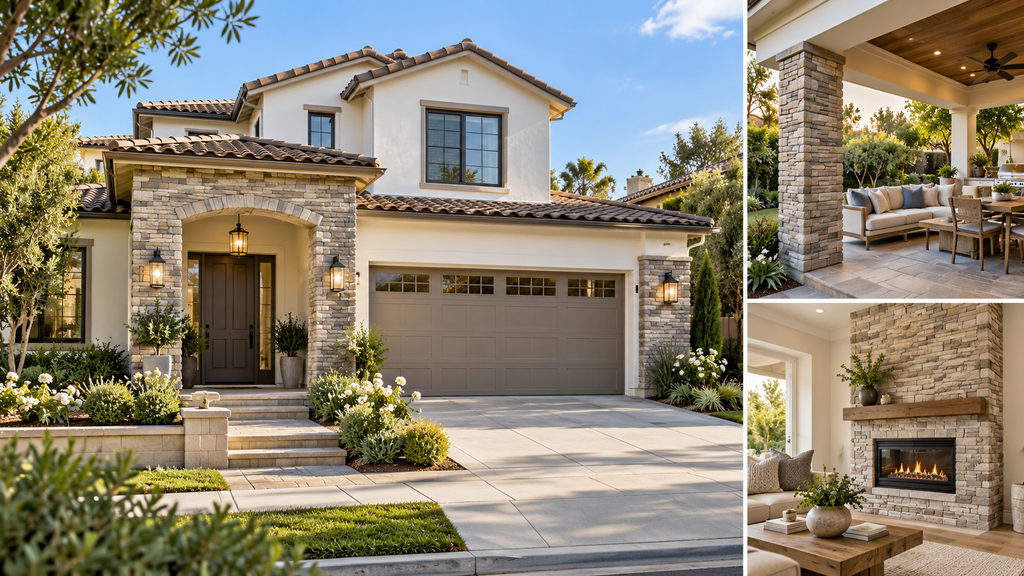
On a traditional Irvine home with light-colored stucco and a covered entry, stone around the doorway might add texture. Covering the entire front elevation, however, could make the design feel heavy.
Possible applications include:
- Front-entry surrounds and columns
- Garage-side accents and selected exterior walls
- Covered patios and outdoor entertaining areas
- Fireplace surrounds, when approved for that use
- Selected interior walls
Placement depends on the home’s architecture, existing materials, and proportions. Turtle Rock, Woodbridge, Northwood, Portola Springs, and Orchard Hills have different home styles. A profile that complements one property might look out of place on another.
The entry, garage, yard, and existing finishes all contribute to the overall appearance.
My article about outdoor lighting and home presentation discusses another way to evaluate outdoor improvements.
Can Manufactured Stone Veneer Be Worth the Cost If You Plan to Stay?
Yes, potentially. Not every home improvement needs to pay for itself at resale to feel worthwhile. Someone who plans to stay may value the appearance and enjoyment of the home for years before selling ever becomes a consideration.
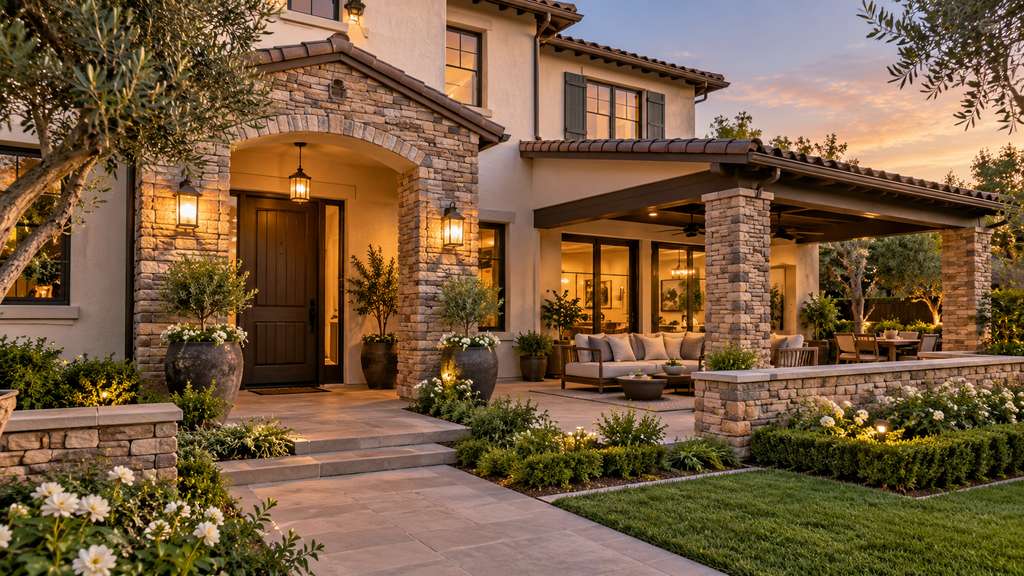
Stone veneer can create a more defined entry, add depth to a plain stucco wall, or bring visual warmth to a covered patio. A homeowner who prefers that look may enjoy it every time they come home or invite friends over. Pride in a home’s appearance is a personal benefit, even though it cannot be measured by an appraisal.
There’s also the question of architectural fit. In some Irvine communities, a carefully selected stone accent may complement nearby homes or reinforce the property’s existing style, provided the design satisfies any applicable HOA rules. The goal isn’t to copy a neighbor’s house. It’s to make the exterior feel more coordinated.
A smaller accent may offer another advantage: a noticeable design change without committing to a complete exterior remodel. Product choice and placement can give an entry, courtyard, or outdoor seating area a more finished appearance.
Of course, enjoyment alone doesn’t settle the budget. Consider the installed cost, how long you expect to stay, the work required to maintain the finish, and whether higher-priority repairs need attention. The value of living with an improvement and its possible future resale value are two different things.
8 Questions to Ask Before Installing Manufactured Stone Veneer
Use these questions before requesting installation bids:
- Does stone suit the home’s architecture? Compare it with the roof, stucco, trim, windows, and other exterior features.
- Where should it begin and end? Choose between an entry accent, columns, a partial wall, or a larger installation.
- Is the existing wall suitable? Have a qualified professional evaluate the substrate, finishes, and attachment requirements.
- How will moisture be managed? Ask about weather barriers, flashing, drainage, and wall penetrations.
- Are permits or HOA approval required? Check with the city and association before construction.
- What’s the complete installed cost? Include preparation, materials, labor, trim, and potential repairs.
- What maintenance will it need? Review cleaning, warranties, replacement materials, and repair procedures.
- Does it make financial sense? Consider the home’s condition, intended use, and expected length of ownership.
A lower bid may not include the same preparation or moisture-management details as a higher one. Before accepting a proposal, make sure the contractor knows whether existing finishes will remain, which materials are included, and who will handle unforeseen wall damage.
The Part Buyers May Never See: What Happens Behind the Stone
Manufactured stone veneer is an exterior finish, not a waterproof wall system. Water can reach concealed areas through joints, openings, and wall transitions. The assembly behind the veneer needs suitable weather protection and drainage.
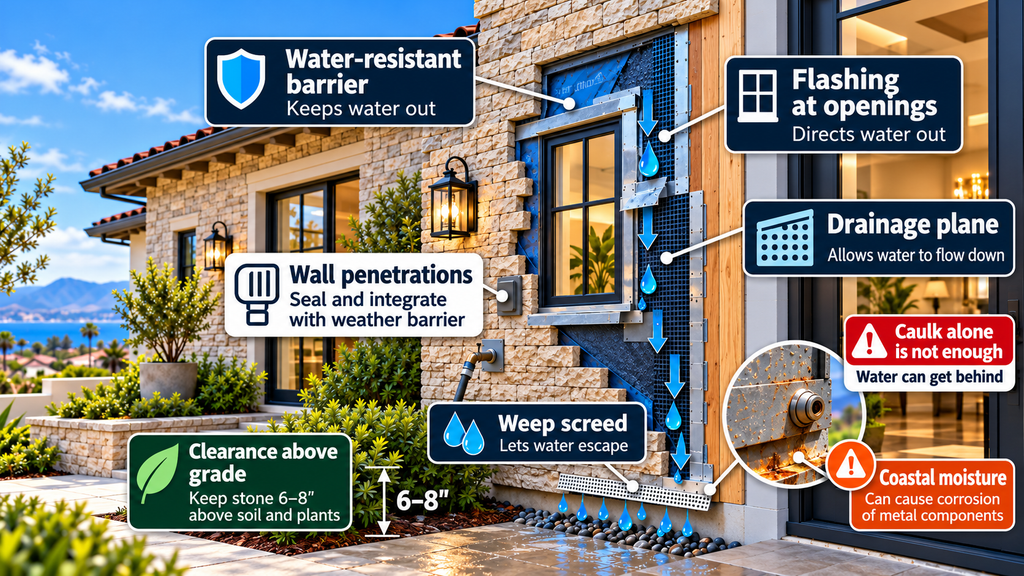
The Concrete Masonry & Hardscapes Association’s Manufactured Stone Veneer Installation Guide, revised in September 2026, addresses construction details and installation requirements. Its guidance on water-resistive barriers and rainscreens explains how moisture-management components work together.
Ask the installer about:
Water-resistive barriers. Material and layer requirements depend on the wall assembly, substrate, and installation system.
Flashing. Windows, doors, roof intersections, and material transitions need detailing that directs water away from vulnerable areas.
Drainage and weep screeds. The wall should have suitable provisions for managing and releasing moisture.
Wall penetrations. Lights, electrical outlets, and hose connections must be integrated into the weather-protection system.
Clearances. Areas near soil, paving, and planting beds require attention to manufacturer and code requirements.
Coastal Orange County properties may also need consideration of moisture exposure and corrosion of metal components.
One particular concern is assuming caulk alone can keep water out. Sealants require maintenance and do not replace properly integrated flashing or a functioning drainage plane. If an installer cannot explain how water will leave the assembly, ask for clarification before work begins.
Manufacturers and building authorities may specify different requirements for framed walls, masonry surfaces, and other substrates. The installation method should fit the actual wall, not just the selected stone.
An attractive finished wall can still conceal installation problems. Work behind the veneer matters as much as its appearance.
How Much Does Manufactured Stone Veneer Cost?
There isn’t one reliable square-foot price for every home. Material selection, wall conditions, installation methods, access, labor, permits, and repairs all affect the final amount.
One proposal might cover removal of old finishes, wall preparation, flashing, veneer installation, and cleanup. Another might assume the surface is ready and price only the veneer work. Those aren’t equivalent bids.
Ask each contractor for a written scope identifying inclusions, exclusions, potential added costs, and how changes will be approved.
For budgeting, ask whether the quote includes scaffolding or lift access, removal and disposal, corner pieces, finishing materials, and protection of nearby plants. Also ask what happens if work reveals damaged sheathing or other conditions that were not visible during the estimate. Those details can affect the final price more than the difference between two stone samples.
Does Manufactured Stone Veneer Increase Home Value?
Possibly, but a national remodeling percentage cannot predict your home’s resale outcome.
The 2025 Cost vs. Value Report published by Zonda estimated these national averages for its defined manufactured-stone-veneer project:
| Measurement | 2025 national estimate |
|---|---|
| Project cost | $11,702 |
| Estimated resale value added | $24,328 |
| Cost recouped | 207.9% |
These are modeled estimates tied to a specific project and study method, not promised returns on an Irvine renovation. A $20,000 custom project should not be assumed to produce the same percentage.

The same 2025 report published regional estimates: a 231.7% cost-recoupment estimate for the Pacific region and 220.1% for the Los Angeles market. Those figures offer geographic context, but neither one should be applied directly to an Irvine property. The study’s defined project may differ substantially from a homeowner’s proposed renovation.
A coordinated stone accent may give some prospective buyers an impression of higher-quality finishes, a more deliberate design, or a better-cared-for exterior. It might also photograph attractively. That is perceived value, not proof of additional appraised value or a higher selling price. Other buyers may prefer the original stucco or a different architectural treatment.
Existing curb appeal, placement, installation quality, buyer preferences, and market conditions can affect the result. The practical question is whether stone adds something meaningful to the home, rather than expense to an exterior that already looks good.
Choosing Stone That Fits the House
Request physical samples and examine them beside the home’s existing materials in daylight and shade. A small sample may look very different across a large wall.
Consider four design decisions:
Color variation
Some products mix many tones; others are more uniform. Compare them with the roof, paint, trim, and paving.
Stone size and profile
A rugged, large-format profile creates a different impression from narrow linear stone. Choose proportions that suit the house.
Mortar joints
Joint width and mortar color affect the final appearance. Some products have tightly fitted pieces, while others feature visible joints.
Transitions to existing materials
Review where stone meets stucco, siding, windows, doors, and trim. Awkward transitions can make an addition seem disconnected from the original design.
Take photographs of the front of the house and compare options before making a commitment. If your HOA has specific exterior-design requirements, include those restrictions in the comparison.
Sometimes repainting or repairing existing finishes is a more practical improvement.
Irvine HOA Approval and Building Permits
Many Irvine neighborhoods have architectural rules for exterior alterations. Before ordering stone, check whether your association requires drawings, product information, color samples, or written approval.
Permits are a separate issue. The City of Irvine’s permit guidance explains that requirements depend on the type and scope of construction. An exterior finish change isn’t automatically exempt.
Review the city’s current Building Permits and Inspections information, as its online permit process has changed. For homes outside Irvine, consult the applicable city or county authority.
Remember that HOA approval and a city permit address different matters. An association’s architectural approval does not replace a permit, and a permit does not necessarily satisfy an HOA’s design rules. Ask both authorities what documentation they need before signing a nonrefundable materials order.
Confirm required approvals before construction starts.
Hiring a Contractor: What Should You Verify?
Ask prospective contractors for comparable project examples and an explanation of their wall preparation, drainage, flashing, and finishing methods.
Use the California Contractors State License Board license lookup to review licensing information.
The written proposal should identify products, scope, permits, schedule, warranties, and responsibility for unexpected repairs. If deteriorated sheathing or signs of water intrusion appear, qualified assessment may be needed before work continues.
Review how the contractor plans to protect the property during work, including windows, paving, plants, and access routes. Confirm who is responsible for cleanup and disposal of removed material.
A real estate broker cannot certify technical installation details; that evaluation belongs with the appropriate building professionals.
How Should Manufactured Stone Veneer Be Maintained?
Follow the manufacturer’s care instructions. Check periodically for loose pieces, damaged joints, cracking, staining, or changes near windows and doors.
Avoid repeatedly soaking the wall with irrigation. Harsh chemicals or aggressive pressure washing may damage certain products.
The CMHA installation checkpoints address moisture exposure, cleaning, and surface damage.
Save product details and, when practical, spare material. Matching discontinued colors or profiles later can be difficult.
Pay attention to changes around doors, windows, and the bottom of the wall, particularly after heavy rain. Staining or recurring dampness warrants investigation by someone qualified to assess the underlying assembly, not just cosmetic cleaning.
Should Irvine Sellers Install Stone Veneer Before Listing?
Not automatically. Compare the proposed improvement with the home’s current appearance, competing properties, buyer expectations, and selling timeline.
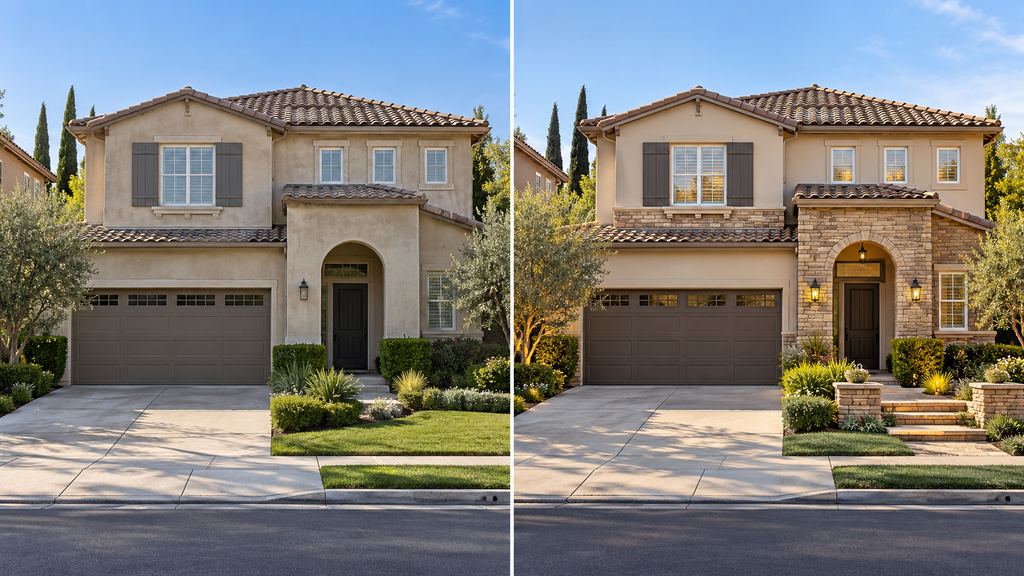
A home with coordinated paint, maintained stucco, and attractive architecture may not benefit enough to justify new stone. Another property with an unfinished-looking entry might benefit from a carefully chosen accent.
If the home has deferred maintenance, addressing damaged trim, failed paint, or other visible defects might be a better starting point. If the goal is only to make listing photos more appealing, evaluate less costly improvements first. Stone should solve a real design or condition issue rather than become an expensive last-minute project.
Pricing, condition, presentation, exposure, and timing should inform the decision. My Irvine and Orange County sellers page explains how I approach home presentation and marketing.
Frequently Asked Questions About Manufactured Stone Veneer
Can manufactured stone veneer be installed over existing stucco?
Sometimes, but it depends on the existing wall system, its condition, the proposed veneer product, and the approved installation method. Homeowners should have the assembly evaluated before assuming the stone can be installed directly over the existing finish.
Is manufactured stone veneer waterproof?
No. Manufactured stone veneer should not be treated as a waterproof barrier. Exterior installations need appropriate weather protection and water-management details behind the decorative finish.
Is manufactured stone veneer suitable for homes near the ocean?
It may be, depending on the product, installation system, exposure, and maintenance requirements. Coastal conditions can influence material selection and corrosion protection. Homeowners should verify suitability with the manufacturer and qualified installer.
Is manufactured stone veneer always less expensive than natural stone?
No. Although some manufactured products may cost less than comparable natural stone selections, total installed cost depends on the material, project design, preparation, labor, accessories, and site conditions.
Should I install manufactured stone veneer myself?
Exterior installation can involve weather barriers, drainage, flashing, substrate preparation, and building-code requirements. Homeowners should not assume that a decorative appearance means the project is simple. Professional evaluation and appropriate licensed installation may be advisable.
Is Manufactured Stone Veneer Right for Your Home?
Manufactured stone veneer can add texture and architectural interest when its design fits the house. Still, homeowners need to understand the underlying wall system, approval requirements, total cost, and long-term maintenance.
The question isn’t whether manufactured stone veneer is fashionable. It is whether the proposed work fits the property, is correctly installed, and serves a practical purpose.
Before selling, consider whether the money would be better spent on repairs or other exterior updates.
A carefully selected improvement may help a home present better. An expensive improvement isn’t necessarily a better one.
For homeowners considering a sale, exterior improvements are only part of how buyers experience a property. Showing the home’s architecture, condition, and outdoor areas clearly can help buyers understand what makes the property appealing.
As an Irvine Real Estate Broker and REALTOR® serving Irvine and surrounding Orange County communities, I use modern marketing methods, including custom video and social media reach, to help my sellers’ homes attract more attention.
Rather than relying only on buyers finding your listing, I work to put your home in front of potential buyers where they’re already spending time: on social media, watching videos, and browsing online from their phones, tablets, televisions, and computers. This includes people who may be considering a move but haven’t started actively searching for a home.
Sometimes, seeing the right home at the right time is enough to turn someone’s curiosity into genuine interest.
I don’t just wait for buyers to find your home. I help potential buyers discover it.
Tony Babarino, Irvine Real Estate Broker and REALTOR®
REAL Broker
Serving Irvine, Newport Beach, and surrounding Orange County communities.
California DRE#01717758
Call/Text: (949) 633-6741

Homeowner information notice: This article provides general real estate and homeowner education, not construction, engineering, legal, or code-compliance advice. Installation requirements and approvals depend on the specific property, materials, and applicable rules. Consult qualified professionals before starting construction. This article is not intended as a solicitation of homeowners already represented by another real estate broker.
Want more Irvine real estate insights, helpful homeowner tips, and original videos in your Google experience? Add TonyBabarino.com as a Preferred Source.