

Quartz Is Still Popular — But Homeowners Have More Choices Now
Quartz countertops are still a practical choice for many kitchens. They offer consistent patterns, broad color options, and relatively simple day-to-day care compared with some natural stones.
But homeowners now have more options worth comparing before automatically choosing quartz.
For homeowners in Irvine, Newport Beach, and surrounding Orange County communities, the better question is not simply “Is quartz good?” It is: Which countertop material best fits this home, this household, the way the kitchen is used, the maintenance expectations, and the overall design?
Written by Tony Babarino, Irvine Real Estate Broker with REAL Broker, serving Irvine, Newport Beach, and surrounding Orange County communities. DRE#01717758.
That comparison matters even more when a homeowner is renovating before a future sale. A countertop can influence how a kitchen feels and photographs, but no particular material guarantees a higher sale price or return on investment. The best choice is usually the one that fits the home well and is installed properly.
Key Takeaways
- Quartz is an engineered surface and is different from natural quartzite, marble, granite, and soapstone.
- Homeowners may want to compare quartz with natural quartzite, porcelain slabs, resin-free sintered stone, marble, soapstone, stainless steel, recycled-glass surfaces, terrazzo, wood accents, and newer low-silica mineral surfaces.
- The major silica concern discussed by OSHA, NIOSH, Cal/OSHA, and public-health agencies involves respirable crystalline silica dust created during fabrication and installation work.
- California is actively considering stronger restrictions on fabrication of engineered-stone products containing more than 1% crystalline silica; as of summer 2026, that process is still in rulemaking and advisory stages.
- Product composition can vary by brand, collection, and color, so homeowners should review the current safety data sheet for the exact surface they are considering.
- For resale, a well-chosen surface may improve presentation and buyer appeal, but homeowners should not assume a specific material will automatically increase property value.
Quartz, Quartzite, and Natural Stone Are Not the Same Thing
One of the most important distinctions is also one of the most commonly confused.
Quartz countertops are engineered surfaces. Quartzite is natural stone.
The U.S. Department of Commerce describes covered quartz surface products as slabs or surfaces made from a mixture that includes predominantly silica—such as quartz or quartz powder—along with a resin binder. The same federal trade scope excludes quarried stone products such as granite, marble, soapstone, and quartzite.
U.S. Department of Commerce — Quartz Surface Products Scope
That does not make one category automatically better than another. It simply means homeowners should understand what they are actually comparing.
A natural quartzite slab, an engineered quartz slab, a porcelain slab, and a sintered surface can look similar from across a showroom while having very different compositions, maintenance needs, fabrication methods, and performance characteristics.
The Silica Issue: What Homeowners Should Understand
Silica awareness is an important part of the countertop conversation, but the issue is easy to misunderstand.
The primary health concern identified by OSHA, NIOSH, Cal/OSHA, and public-health agencies involves workers who are exposed to respirable crystalline silica dust during cutting, grinding, drilling, polishing, fabrication, and installation.
NIOSH reported in January 2026 that engineered stone used for countertops commonly has very high crystalline silica content and that workers who fabricate these materials are at risk of silicosis. OSHA and NIOSH also issued an updated joint hazard alert in February 2026 focused specifically on countertop manufacturing, finishing, and installation.
CDC/NIOSH — Engineered Stone and Silicosis
OSHA/NIOSH — Worker Exposure to Silica During Countertop Manufacturing, Finishing, and Installation
California data underscores why this issue is receiving attention. In November 2025, the California Department of Public Health reported 432 confirmed silicosis cases among California countertop workers since 2019, including at least 25 deaths and 48 lung transplants.
California Department of Public Health — Silicosis Health Advisory
California Is Still Considering Additional Restrictions
California has already strengthened worker-protection rules for respirable crystalline silica.
In May 2026, the California Occupational Safety and Health Standards Board granted a petition in part and directed Cal/OSHA to begin a process that could prohibit fabrication and installation of artificial-stone products containing more than 1% crystalline silica.
Cal/OSHA then held an advisory meeting on July 31, 2026 regarding a proposed emergency regulation.
As of September 2026, homeowners should understand this as an active rulemaking process, not as a final statewide product ban already in effect.
California DIR — Standards Board Advances Silicosis Protections
Cal/OSHA — Emergency Silica Advisory Committee
California’s current silica standard already identifies cutting, drilling, grinding, polishing, and similar work on artificial stone as high-exposure trigger tasks when the material contains more than specified levels of crystalline silica.
Cal/OSHA — Title 8 Section 5204
The practical homeowner takeaway is not to become a workplace-safety inspector. It is simply reasonable to ask what the material contains, whether a current safety data sheet is available, who will fabricate it, and whether the fabricator follows current worker-safety requirements.
Australia Has Already Taken a Different Approach
Australia implemented a national engineered-stone ban beginning July 1, 2024.
Safe Work Australia defines the banned engineered-stone category using a combination of crystalline silica content, other constituents, and the manufacturing process. The definition generally includes products containing at least 1% crystalline silica that are created by combining natural stone materials with other chemical constituents and then hardened.
Safe Work Australia specifically excludes certain categories from that engineered-stone definition, including qualifying porcelain products and resin-free sintered stone.
Safe Work Australia — Engineered Stone Ban
Australia’s policy does not automatically determine what California will do. It does, however, show why homeowners are hearing more about material composition and low-silica alternatives.
12 Countertop Options to Compare Before Choosing Quartz
Here are 12 countertop materials homeowners may want to compare before choosing quartz, including natural stone, porcelain, sintered surfaces, recycled materials, wood, metal, and concrete.
- Natural quartzite
- Marble
- Granite
- Soapstone
- Porcelain slabs
- Resin-free sintered stone
- Low-silica mineral surfaces
- Recycled or crushed-glass surfaces
- Terrazzo
- Stainless steel
- Wood or butcher block
- Concrete
What to Know About Each Countertop Option
The following details highlight the main characteristics, tradeoffs, and questions homeowners may want to consider for each countertop material.
- Natural Quartzite — Natural stone with one-of-a-kind veining and slab variation.
- Marble — A classic natural stone known for distinctive veining and a patina that can develop over time.
- Granite — A familiar natural-stone option with broad variation in color, pattern, and finish.
- Soapstone — A softer-looking natural stone with a matte appearance and natural patina.
- Porcelain Slabs — Large-format manufactured surfaces that can create a clean, contemporary look.
- Resin-Free Sintered Stone — A manufactured surface category that can offer modern styling without the same resin-based composition as traditional engineered quartz.
- Low-Silica Mineral Surfaces — Newer manufactured products designed with reduced crystalline silica content compared with conventional quartz.
- Recycled or Crushed-Glass Surfaces — Distinctive surfaces that use glass as part of the visible material composition.
- Terrazzo — An architectural surface that can combine stone, glass, or other aggregates in a binder.
- Stainless Steel — A durable, professional-looking surface often associated with prep kitchens and contemporary design.
- Wood or Butcher Block — A warmer material that can be used for full countertops or as an accent surface.
- Concrete — A highly customizable surface that can be formed in different shapes, thicknesses, colors, and finishes.
The best choice depends on how the kitchen is used, the look of the home, maintenance expectations, budget, fabrication quality, and the specific product or slab being considered.
Quick Comparison
| Material | Why Homeowners Consider It | What to Ask About |
|---|---|---|
| Natural quartzite | Natural veining and one-of-a-kind slabs | Sealing, etching, stain resistance, authenticity of the stone |
| Marble | Classic natural-stone appearance | Etching, staining, patina, sealing and care |
| Granite | Wide natural variation and long history in kitchens | Finish, sealing, pattern, outdoor suitability for the specific slab |
| Soapstone | Matte, softer visual character and natural patina | Scratching, color range, maintenance preferences |
| Porcelain slabs | Large-format architectural look and thin profiles | Edge treatment, chipping risk, outdoor suitability, installer experience |
| Resin-free sintered stone | Contemporary appearance and broad design uses | Exact composition, silica content, fabrication requirements |
| Low-silica mineral surfaces | More consistent patterns with newer formulations | Exact silica percentage, safety data sheet, warranty |
| Recycled or crushed-glass surfaces | Distinctive color and visual texture | Binder type, repairability, stain resistance, maintenance |
| Terrazzo | Custom architectural appearance | Binder, sealing, fabrication and installation |
| Stainless steel | Professional prep-kitchen look | Scratching, fingerprints, edge details, noise |
| Wood or butcher block | Warmth and contrast | Water exposure, maintenance, refinishing |
| Concrete | Custom shape, thickness and finish | Cracking, staining, sealing and long-term appearance |
This table is a starting point—not a substitute for reviewing the actual product and discussing the project with the appropriate fabricator, designer, contractor, or other qualified professional.
Natural Quartzite: A Popular Alternative for Homeowners Who Want Natural Stone

Natural quartzite can be appealing when a homeowner wants natural variation and dramatic veining without choosing marble.
Because it is a quarried natural stone, each slab can look different. That can create a more individual result than a highly repeatable manufactured pattern.
But labels in stone yards can sometimes create confusion, so homeowners should ask the supplier and fabricator to confirm what the slab actually is and how that specific stone should be maintained.
Questions worth asking include:
- Does this slab need sealing?
- How does it react to acidic foods?
- Is it prone to staining?
- What finish is recommended?
- Can the edge profile I want be fabricated safely?
- How visible will seams be?
- Is the slab appropriate for the intended location?
Do not assume every quartzite slab behaves identically simply because the category name is the same.
Marble: Beautiful, but Best for Homeowners Who Understand Patina
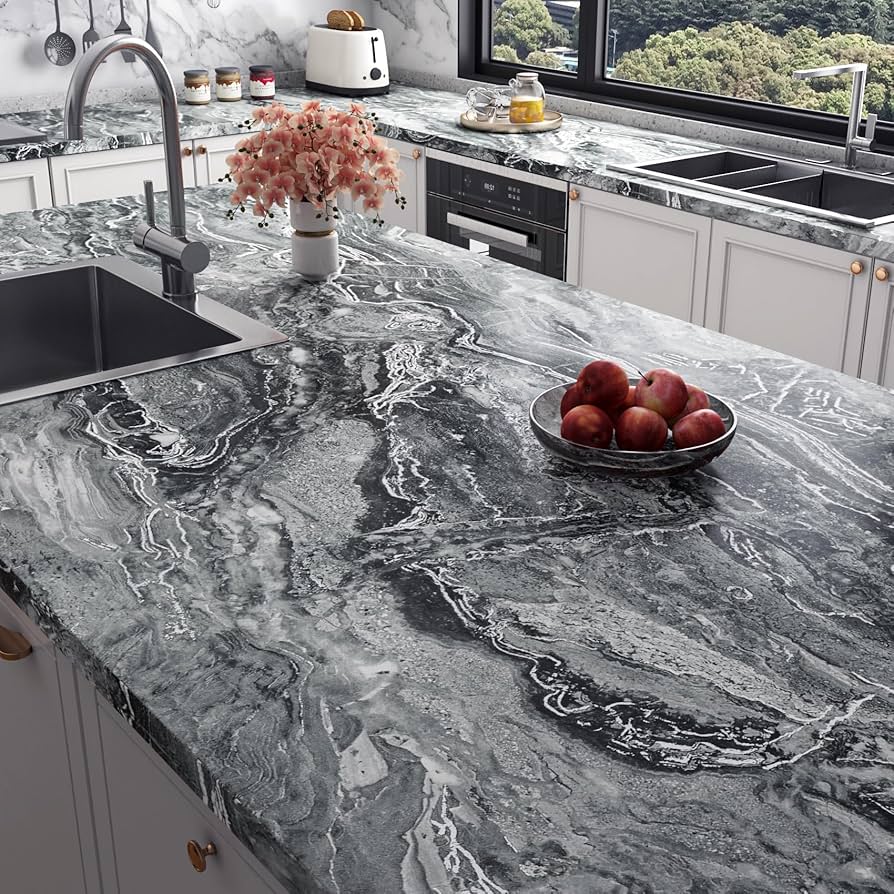
Marble continues to be used in high-end kitchens, bathrooms, bars, and statement areas because of its natural veining and classic appearance.
It can also etch when exposed to acidic substances and may stain depending on the stone, finish, sealing, and use.
Some homeowners appreciate the patina that develops over time. Others want a surface that stays looking as close to new as possible.
Neither preference is wrong.
The important part is understanding how the chosen marble is likely to age before committing to a large installation.
Porcelain Slabs and Resin-Free Sintered Stone
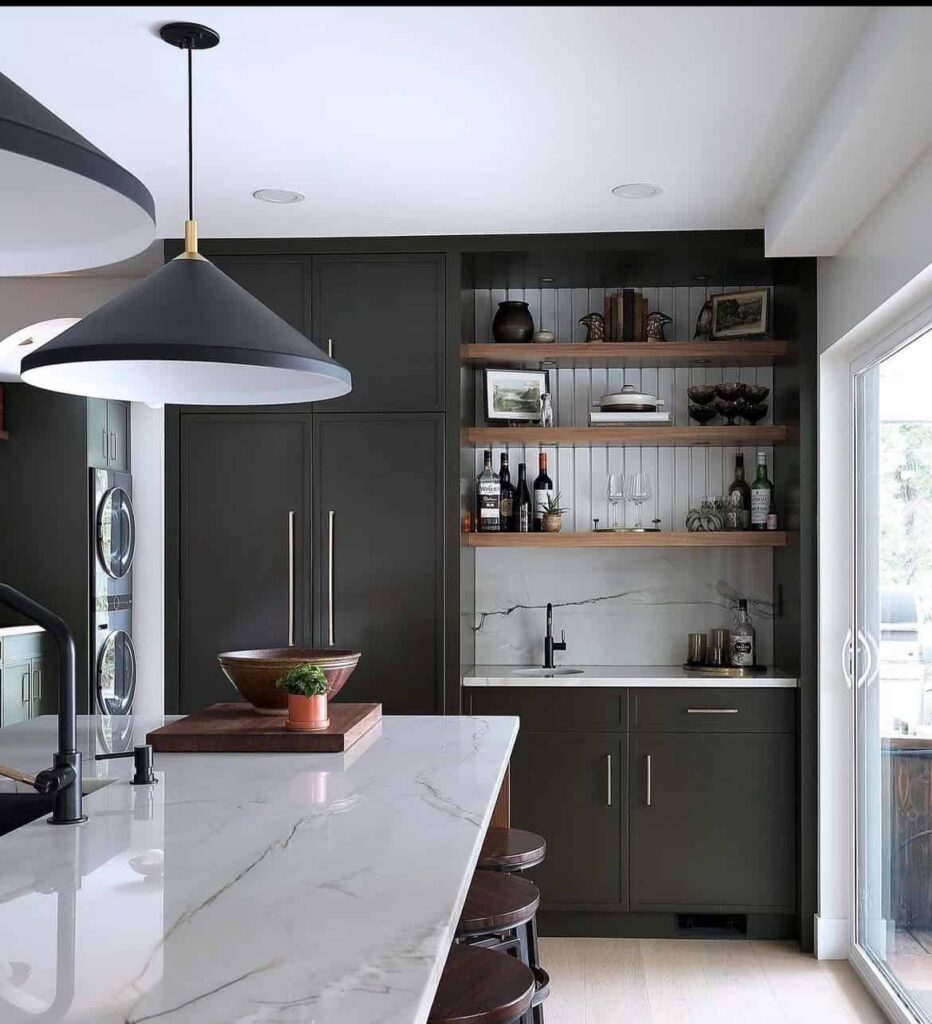
Porcelain slabs and resin-free sintered stone are worth comparing when homeowners want a large-format, modern surface.
These categories are especially interesting because Safe Work Australia’s engineered-stone definition specifically excludes qualifying porcelain products and sintered stone that does not contain resin.
That does not mean every porcelain or sintered product is identical or silica-free.
Homeowners should still verify:
- the exact product composition;
- current crystalline silica content;
- whether resin is present;
- whether the product is approved for the intended indoor or outdoor use;
- fabrication requirements; and
- whether the installer has experience with that specific material.
Large slabs, thin profiles, mitered edges, cutouts, and waterfall returns can make fabrication quality especially noticeable.
Low-Silica Mineral Surfaces: A Fast-Changing Category
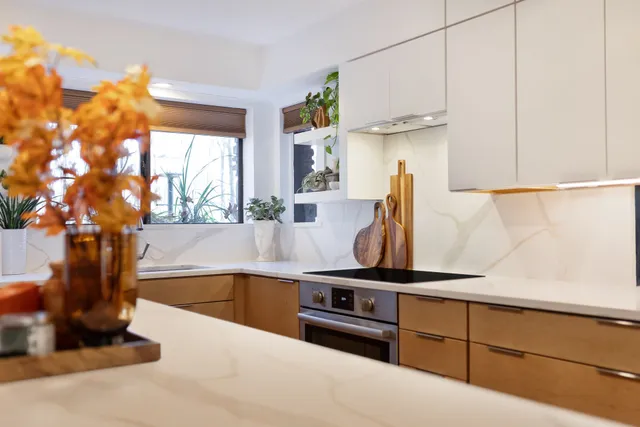
Some homeowners still prefer the predictable patterns and maintenance profile associated with engineered surfaces but want newer formulations with reduced crystalline silica content.
Manufacturers are actively changing product lines.
Cosentino currently states that Silestone products use its Hybriq+ technology and identifies collections with maximum crystalline silica levels of 40% or 10%, depending on the product.
Cosentino — Silestone Low-Silica Surfaces
Caesarstone currently states that its Mineral surfaces contain less crystalline silica than conventional quartz, with products below 40% and some below 10%.
Caesarstone — Mineral Countertops
Those are manufacturer claims for specific current product lines. They should not be generalized to every product a brand has ever sold.
Ask for the current safety data sheet for the exact color and product being considered.
Recycled Glass, Terrazzo, Stainless Steel, Wood, and Mixed-Material Kitchens
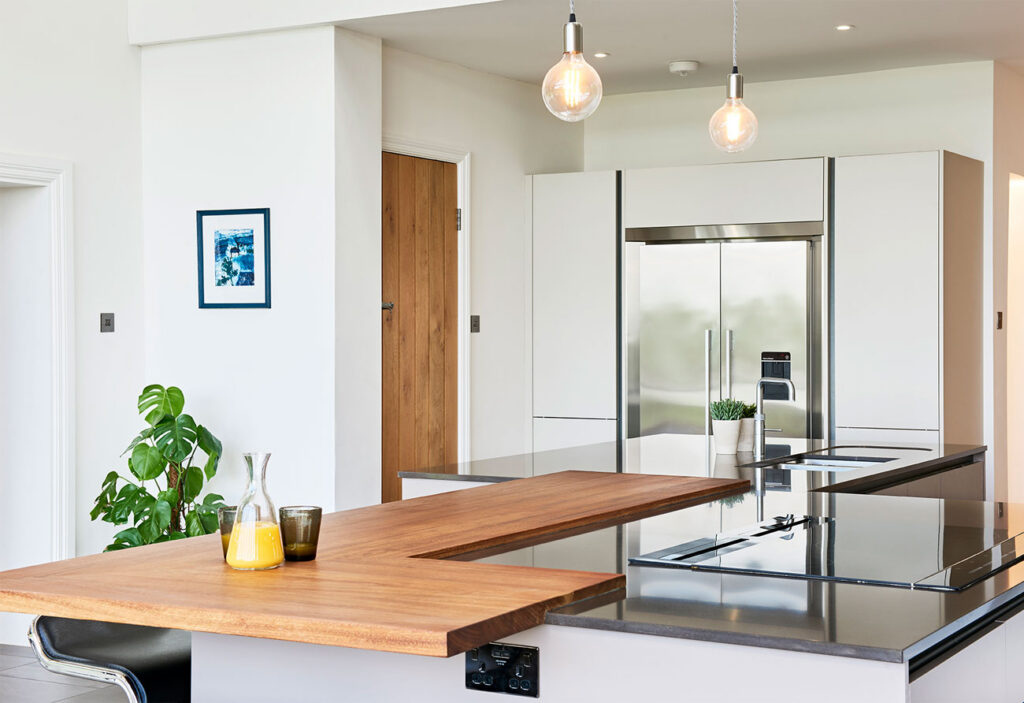
A kitchen does not need to use one countertop material everywhere.
Some homeowners intentionally mix surfaces by function.
Examples might include:
- natural stone on the main island;
- stainless steel in a prep area;
- wood on a breakfast bar;
- porcelain around a cooking wall;
- a distinctive glass or terrazzo surface in a bar;
- soapstone in a pantry; or
- a dramatic feature stone in a lower-use entertainment area.
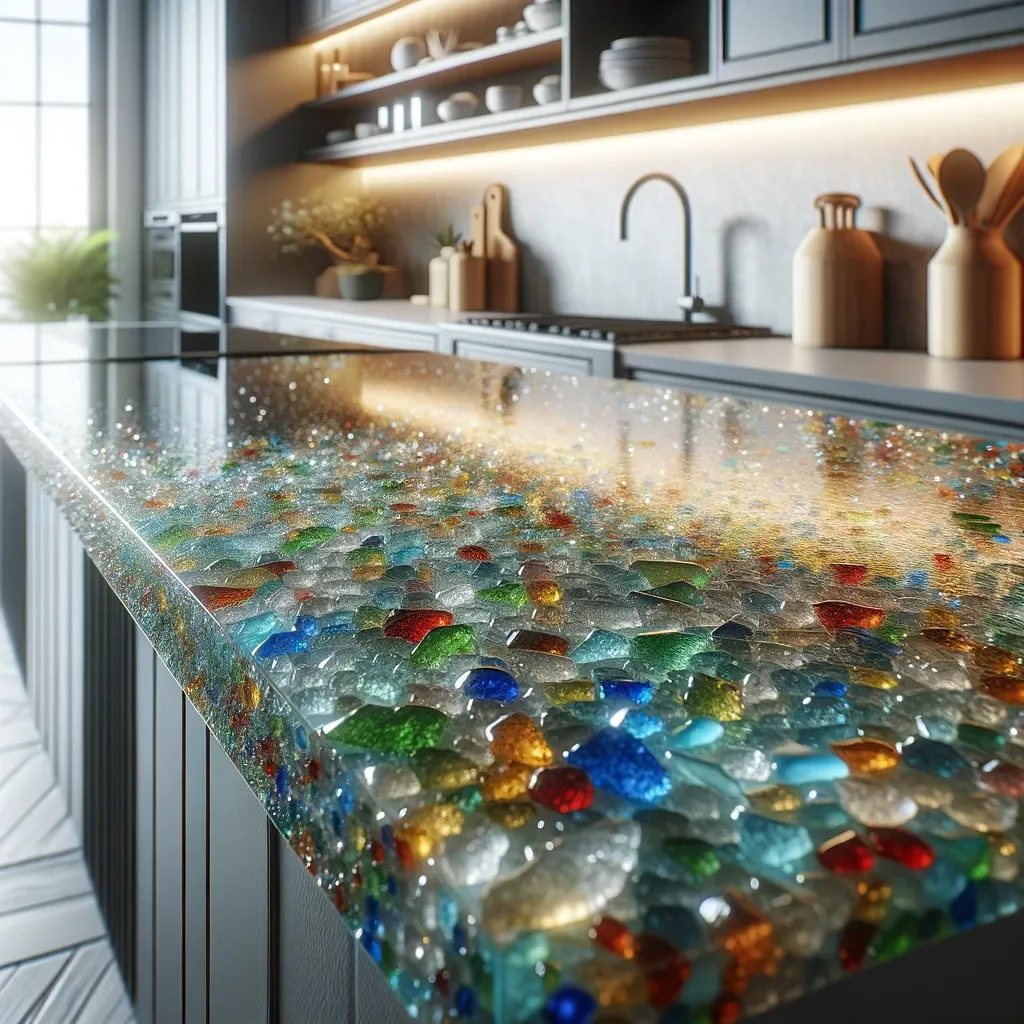
This can create a more custom look, but it can also create visual clutter when too many materials compete with one another.
The best combination usually depends on the cabinetry, flooring, backsplash, lighting, architecture, and how the room connects to nearby spaces.
The Material Is Only Part of the Result
A beautiful countertop can still look disappointing if the detailing is weak.
Homeowners should consider:
- slab layout;
- seam placement;
- edge profiles;
- backsplash transitions;
- bookmatching when appropriate;
- waterfall returns;
- sink and cooktop cutouts;
- overhangs;
- support requirements;
- finish selection;
- lighting; and
- how the surface relates to cabinets, flooring, walls, and hardware.
These are design and fabrication decisions. The appropriate fabricator, designer, contractor, engineer, or other qualified professional should determine what is structurally and technically appropriate for the specific installation.
Smart Questions to Ask Before Choosing a Countertop
Before committing to quartz or any alternative, ask:
- What exactly is this material?
- Is it natural stone, engineered quartz, porcelain, sintered stone, mineral surface, glass, solid surface, or another composite?
- What is the current crystalline silica content?
- Can I see the safety data sheet for this exact product and color?
- Who will fabricate and install it?
- What worker-safety controls are required for this material?
- Will fabrication or cutting occur inside or around the home?
- Does the material need sealing?
- How does it react to heat, acidic foods, stains, scratches, or impacts?
- What maintenance does the manufacturer recommend?
- Can chips, scratches, stains, or etching be repaired?
- Is the material approved for outdoor use if that is part of the project?
- What warranty applies?
- How visible are seams likely to be?
- Does the material fit the architecture and surrounding finishes of the home?
The point is not to turn the homeowner into a countertop expert.
The point is to ask enough questions to understand what is being purchased.
Could the Countertop Choice Matter When Selling?
Yes—but not because one countertop material automatically produces a particular sale price.
Buyers may respond to the overall impression of a kitchen: whether it feels current, clean, cohesive, functional, appropriately maintained, and consistent with the rest of the home.
A distinctive natural slab may fit one property beautifully. A quieter manufactured surface may fit another better. An expensive material that fights the architecture can be less effective than a simpler material chosen well.
If you are remodeling partly because you expect to sell within the next few years, consider whether the countertop:
- fits the home’s overall style;
- works with the cabinet color and flooring;
- is easy for a future buyer to understand;
- has maintenance requirements that are reasonable for the likely buyer;
- photographs well;
- looks well installed; and
- feels appropriate for the home’s price point without becoming overly personalized.
This is also why I would not recommend choosing a countertop solely because someone promises it will “add value.” Buyer response and resale impact can vary by property, workmanship, design, market conditions, and the rest of the home.
What This Means If You Are Thinking About Selling
If a kitchen remodel is being considered before a sale, the decision is usually bigger than the countertop itself.
Sometimes replacing the countertop makes sense. Sometimes the better decision may be improving lighting, paint, hardware, cabinet condition, grout, flooring, appliances, or presentation instead of undertaking a larger renovation.
That is where looking at the home through a buyer’s eyes can be useful before spending money.
If you are thinking about selling a home in Irvine or Orange County, I would be happy to walk through the property with you and talk about what may be worth addressing—and what may not be worth spending money on—before you go on the market.
Helpful Resources
CDC/NIOSH — Engineered Stone and Silicosis
Current occupational-health information about engineered-stone fabrication workers and respirable crystalline silica.
CDC/NIOSH Engineered Stone and Silicosis
OSHA/NIOSH — Countertop Silica Hazard Alert
Worker-safety guidance for manufacturing, finishing, and installing natural and engineered stone countertops.
OSHA/NIOSH Hazard Alert
California Department of Public Health — Silicosis Health Advisory
California case data and public-health guidance related to countertop workers.
CDPH Silicosis Advisory
Cal/OSHA — Respirable Crystalline Silica Standards and Resources
Current California rules and worker-protection information.
Cal/OSHA Silica Resources
Cal/OSHA — 2026 Emergency Rulemaking Advisory Process
Current information about California’s proposed restrictions involving engineered stone with more than 1% crystalline silica.
Cal/OSHA Emergency Silica Advisory Committee
Safe Work Australia — Engineered Stone Ban
Australia’s current engineered-stone prohibition and category definitions.
Safe Work Australia
Final Thoughts
Quartz is still one countertop option. It is simply no longer the only obvious option.
Natural quartzite, marble, porcelain, resin-free sintered stone, low-silica mineral surfaces, recycled-glass products, terrazzo, stainless steel, wood, concrete, and mixed-material designs give homeowners a much wider range of choices.
The best decision usually comes from matching the material to the home, the household, the maintenance expectations, the intended use, and the quality of the fabrication—not from following a trend or assuming one material is universally “best.”
Before ordering slabs, understand what the material is, what it requires, how it will be fabricated, and how it fits the rest of the home.
Tony Babarino
Irvine Real Estate Broker with REAL Broker
Serving Irvine, Newport Beach, and surrounding Orange County communities
California DRE#01717758
TonyBabarino.com
Call/Text: (949) 633-6741

Disclaimer: This article is for general homeowner and real-estate educational information only. Tony Babarino is providing general homeowner and real-estate information and is not acting as a contractor, fabricator, engineer, architect, industrial hygienist, occupational-safety professional, medical professional, environmental professional, building-code official, product certifier, attorney, or other technical specialist. Countertop composition, crystalline silica content, product performance, warranties, installation requirements, structural requirements, fabrication practices, worker-safety requirements, maintenance, repairability, and suitability can vary by product, color, manufacturer, property, installation, jurisdiction, and current regulations. Review the current manufacturer documentation and safety data sheet for the exact product, and consult the appropriate qualified professionals before making project-specific decisions. If your property is currently listed or you are already represented by another real estate broker, this is not intended as a solicitation.
FAQs About Countertop Options Beyond Quartz
Is quartz still a good countertop material?
Quartz can still be a practical countertop choice for many homes. It offers consistent patterns and generally straightforward maintenance, but homeowners may want to compare it with natural stone, porcelain, sintered stone, low-silica mineral surfaces, and other options before deciding.
What is the difference between quartz and quartzite?
Quartz countertops are engineered surfaces made from a mixture of materials that typically includes silica and a binder. Quartzite is a naturally quarried stone. They can look similar, but their composition, maintenance, fabrication, and performance characteristics are different.
Are quartz countertops dangerous after they are installed?
The major health concern identified by OSHA, NIOSH, Cal/OSHA, and public-health agencies involves respirable crystalline silica dust generated during fabrication and installation work. Homeowners should still review the exact product information and discuss project-specific safety questions with the appropriate qualified professionals.
Is California banning quartz countertops?
Not currently as a blanket statewide homeowner-sales ban. California is actively pursuing rulemaking that could prohibit fabrication and installation of certain engineered-stone products containing more than 1% crystalline silica. As of September 2026, that process is still underway, so homeowners should check current Cal/OSHA information before relying on older summaries.
What countertop materials have lower crystalline silica content?
It depends on the exact product. Some newer mineral surfaces are marketed with lower crystalline silica levels, and manufacturers such as Cosentino and Caesarstone currently identify certain products below 40% and some at or below approximately 10%. Porcelain, resin-free sintered stone, glass-based surfaces, stainless steel, wood, and other materials have different compositions. Always verify the exact product rather than assuming based on the category name.
Is quartzite better than quartz?
Not universally. Quartzite offers natural variation and may appeal to homeowners who want natural stone, while quartz offers more predictable patterns and different maintenance characteristics. The better choice depends on the specific slab or product, household use, maintenance expectations, design, installation quality, and budget.
Is marble a bad choice for a kitchen?
Not necessarily. Marble can be appropriate for homeowners who like its appearance and accept that it may etch, stain, and develop patina over time. A homeowner who wants a surface to remain nearly unchanged may prefer another material.
Are porcelain slabs good for outdoor kitchens?
Some porcelain products are marketed for outdoor applications, but homeowners should verify the exact manufacturer specifications, installation requirements, UV suitability, temperature limitations, and warranty for the specific product before using it outdoors.
Will replacing countertops increase my home’s value?
There is no guaranteed increase in value or return on investment from replacing countertops. A well-chosen, well-installed surface may improve presentation and buyer appeal, but resale impact depends on the property, the rest of the kitchen, workmanship, design, local market conditions, and buyer preferences.
What should I ask a countertop fabricator before starting?
Ask what the material contains, whether a current safety data sheet is available, how fabrication will be performed, what worker-safety controls apply, whether cutting will occur on site, how seams and edges will be handled, what maintenance is required, what warranty applies, and whether the product is suitable for the intended location.
Want more Irvine real estate insights, helpful homeowner tips, and original videos in your Google experience? Add TonyBabarino.com as a Preferred Source.