
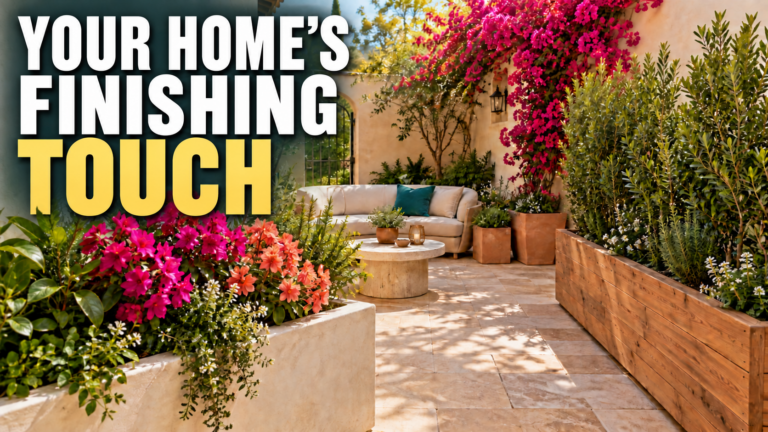
Decorative planter boxes can do more than add flowers to an empty corner. Used thoughtfully, they can frame an entry, soften hard surfaces, add privacy, bring color to a patio, and make an outdoor space feel more finished without a major renovation.
For homeowners in Irvine and surrounding Orange County communities, a successful planter setup usually comes down to three things: choosing the right scale, matching plants to the available sun, and making sure the container drains properly.
Written by Tony Babarino, Irvine Real Estate Broker with REAL Broker, serving Irvine, Newport Beach, and surrounding Orange County communities. DRE#01717758.
Key Takeaways
- Start with the location, not the plant. Measure the space and note sun, shade, wind, and foot traffic.
- Use planter boxes to solve a design problem: define an entry, soften a wall, add privacy, fill an awkward corner, or bring color to a patio.
- Drainage matters. UC Master Gardeners of Orange County advises that containers need drainage holes and that gravel at the bottom does not substitute for proper drainage.
- Larger containers generally hold moisture longer and give roots more room, which can help in Southern California’s warm, dry conditions.
- If you may sell later, clean, healthy, well-scaled planters can support curb appeal, but they should complement the home rather than overwhelm it.
11 Decorative Planter Box Ideas for the Home
Use this as a quick starting list, then choose the ideas that actually fit your space, light, maintenance preferences, and home style.
- Pair planters at the front door to create a more intentional entry.
- Add window boxes for color without using patio or walkway space.
- Use long rectangular planters to soften blank walls and hardscape.
- Add railing planters to balconies, decks, or compact patios.
- Layer planters at different heights to improve an empty corner.
- Use tall, narrow planters where floor space is limited.
- Create privacy with planter boxes and appropriately sized taller plants.
- Choose metal planters for a clean, architectural look.
- Use wood planter boxes for warmth and natural texture.
- Grow herbs or compact edibles near the kitchen or dining area.
- Try the thriller-filler-spiller formula for a balanced mixed planting.
1. Create a Pair of Planters at the Front Door
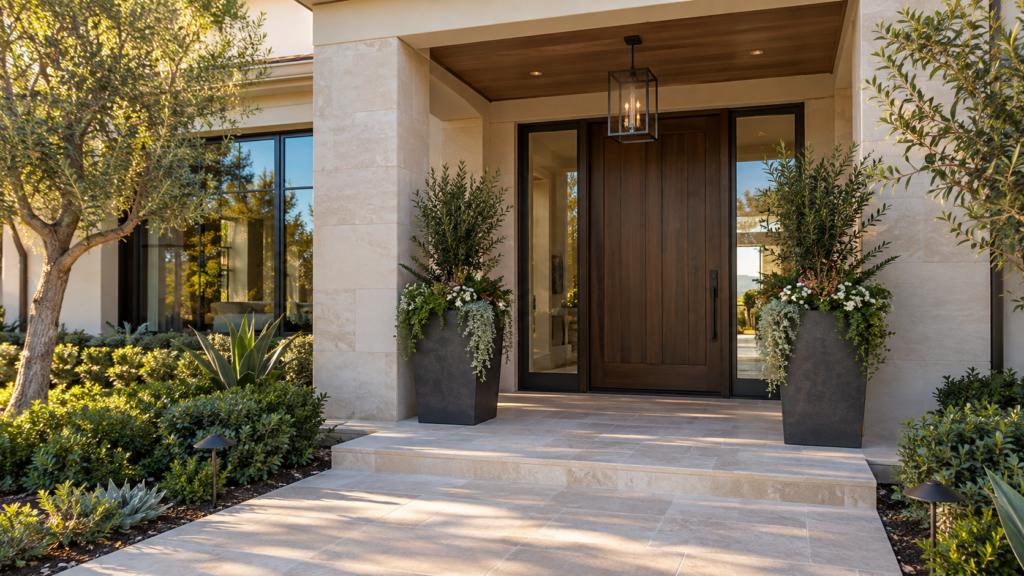
Two planters placed on either side of the front door can make an entry feel more intentional. A large doorway or covered porch can usually handle taller containers, while a narrow entry may look better with slim planters that leave plenty of walking room.
Choose a finish that relates to the architecture. Clean-lined fiberglass or metal can suit a contemporary exterior, while wood, stone-look, or glazed ceramic may work well with traditional or transitional homes.
2. Add Window Boxes for Color Without Using Floor Space
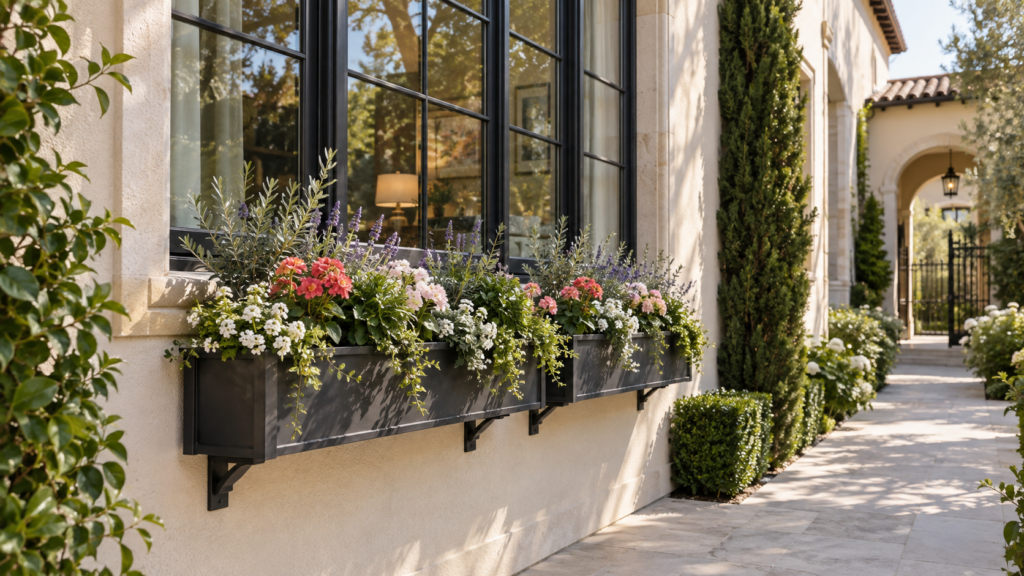
Window boxes can add color beneath a front window, kitchen window, balcony, or courtyard opening without taking over a walkway.
Before attaching one to the exterior, consider the weight when fully watered and use a mounting method appropriate for the surface. Homeowners in an HOA may also want to review exterior-modification rules first.
3. Use Long Rectangular Planters to Soften Blank Walls
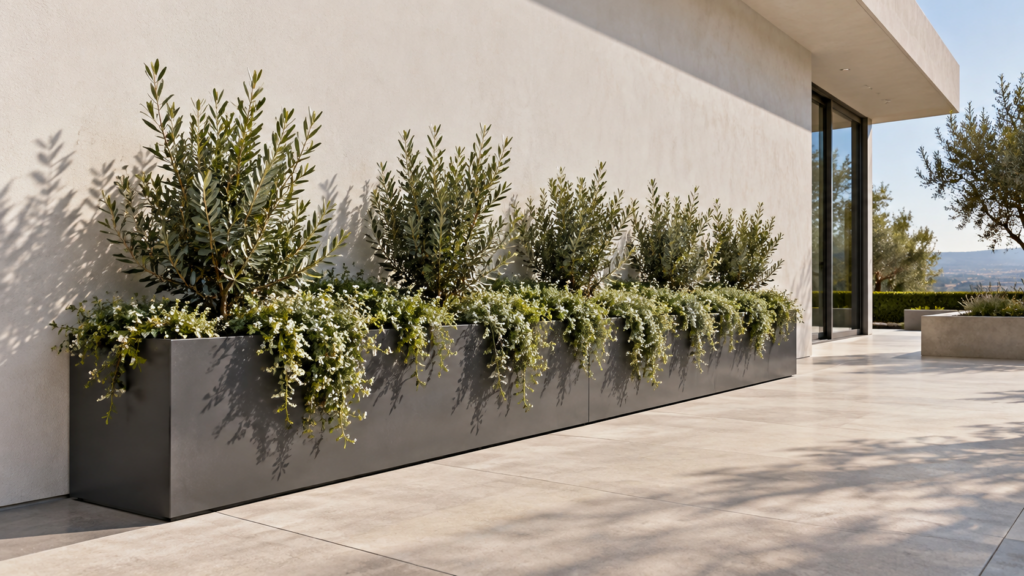
A long planter can break up a large stucco wall, patio edge, or expanse of concrete. This can be especially useful around newer Orange County homes with clean architectural lines and limited built-in planting beds.
Instead of filling the box with many unrelated plants, repeat one or two compatible varieties for a calmer, more deliberate look.
4. Turn Railing Planters Into a Small-Space Garden
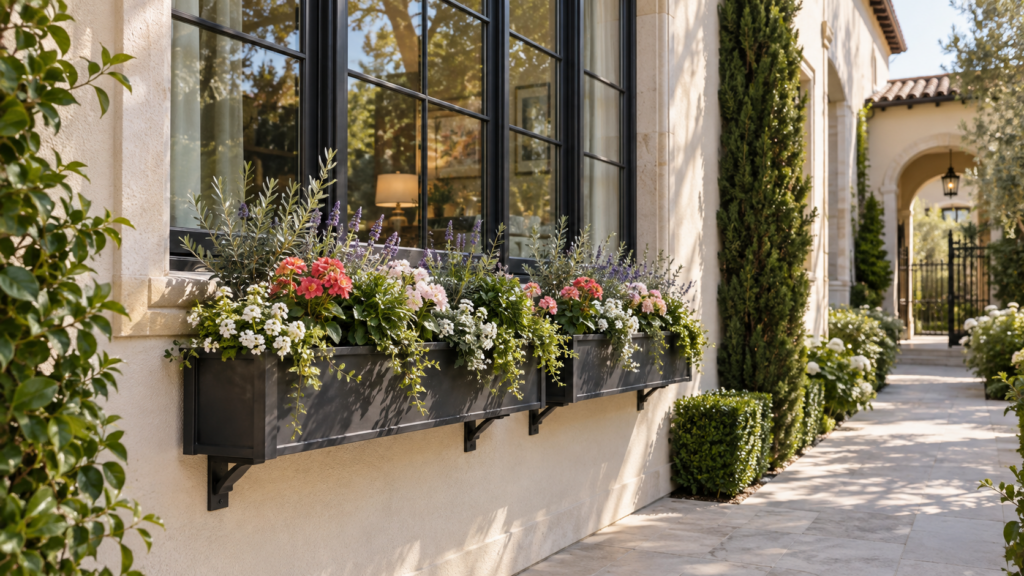
Railing planters can bring greenery to balconies, decks, and compact patios. They are useful for flowers, herbs, or trailing plants when floor space is limited.
Make sure the planter is designed for the railing, is securely installed, and will not create unwanted runoff. If the mounting or load is uncertain, a qualified professional can help evaluate the setup.
5. Build a Layered Corner With Different Heights
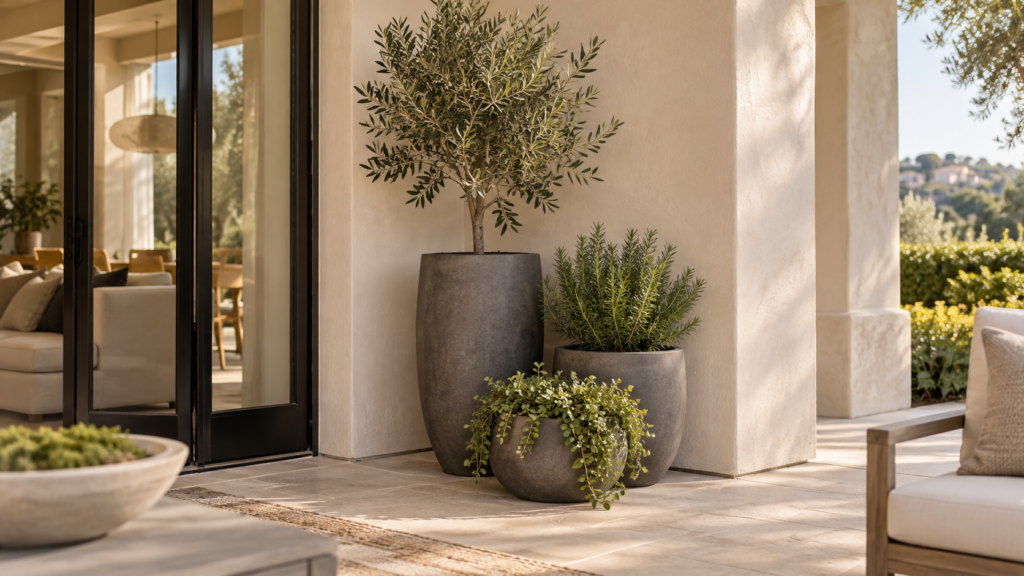
An empty patio corner can feel unfinished. Try combining two or three planters at different heights instead of relying on one oversized container.
Keep one visual element consistent—such as color, material, or plant family—so the grouping looks collected rather than random.
6. Use Tall, Narrow Planters Where Space Is Tight
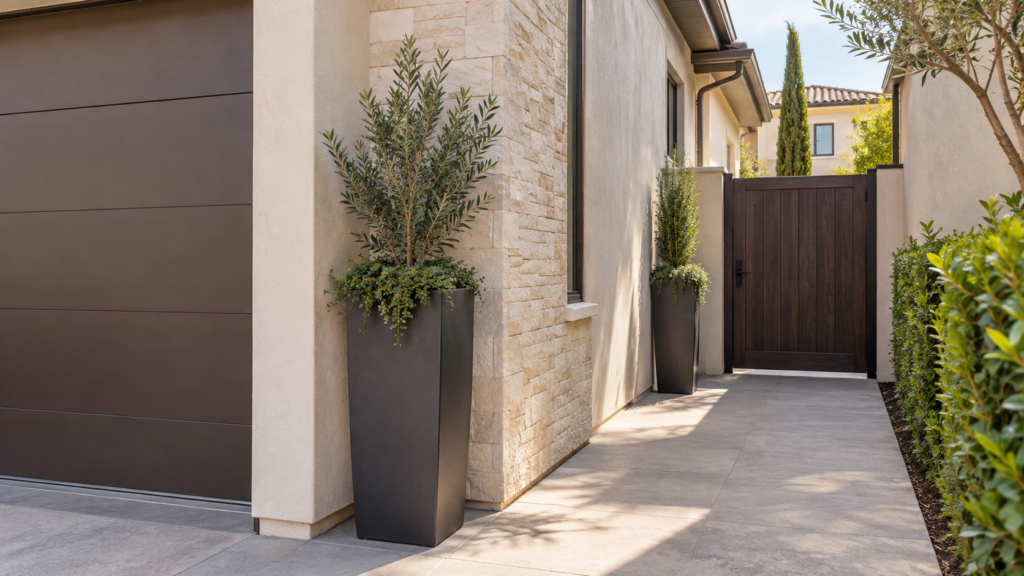
Tall planters can add height without taking up much floor area. They work well beside garage doors, at narrow entries, between patio doors, or near a gate.
Avoid placing them where they narrow a walkway, block visibility, or interfere with doors and gates.
7. Create Privacy With Planter Boxes and Taller Plants
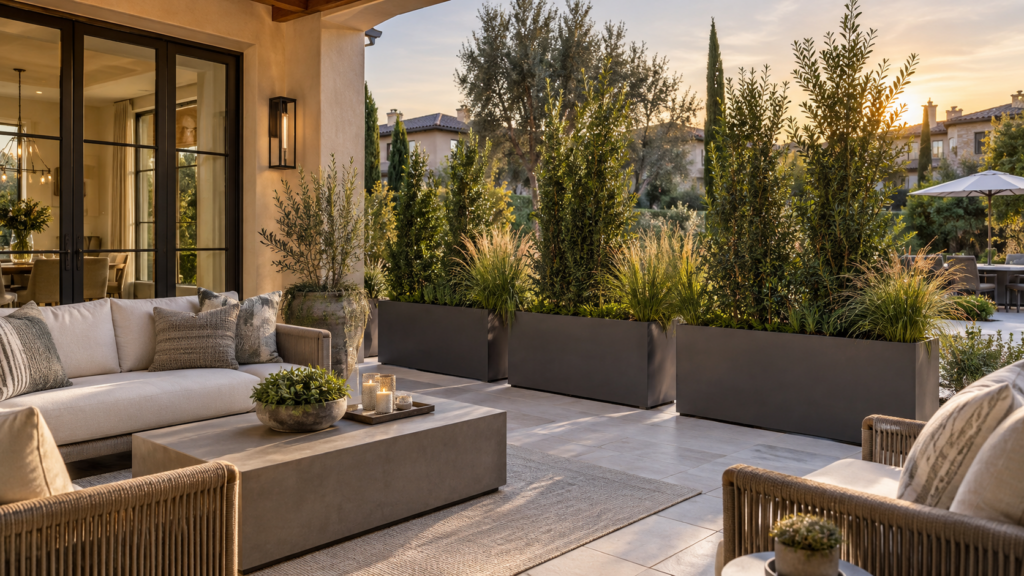
Planter boxes can help define a patio or seating area when you want more separation. Depending on the location, taller grasses, shrubs, or trellised plants may provide screening without building a permanent wall.
Consider the plant’s mature size from the beginning so it does not quickly outgrow the box or create more maintenance than expected.
8. Use Metal Planters for a Cleaner, More Modern Look
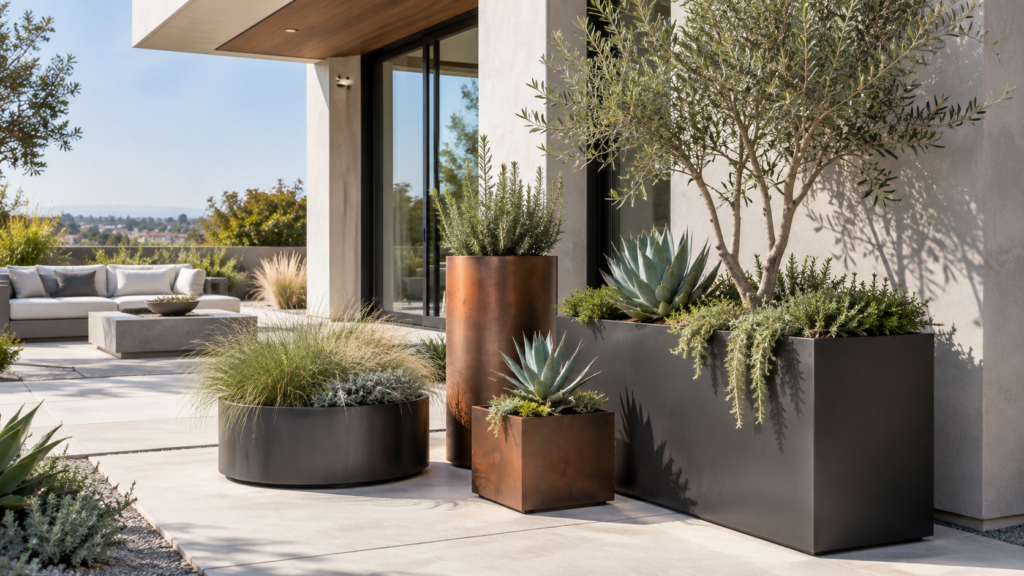
Powder-coated metal, aluminum, steel-look, and copper-toned planters can add a crisp architectural element to modern or transitional homes.
Some materials can heat up in direct sun, so consider plant choice, container placement, and watering needs together, particularly on exposed patios.
9. Choose Wood Planters for Warmth and a Natural Feel
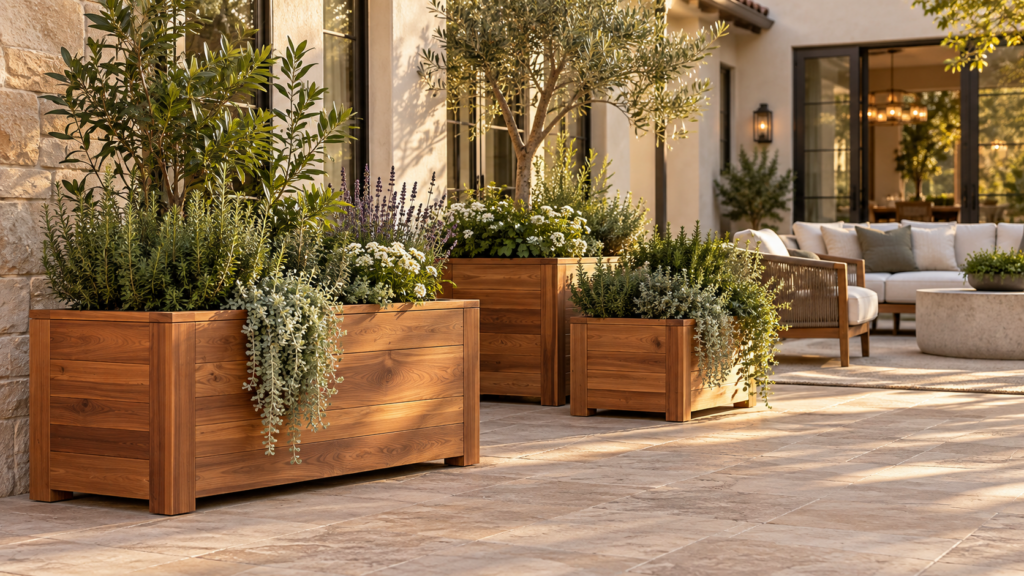
Wood planter boxes can work well around patios, decks, courtyards, and garden areas because they add texture without feeling overly formal.
If you build your own, choose materials and finishes appropriate for outdoor exposure and make drainage part of the design.
10. Grow Herbs or Edibles Near the Kitchen
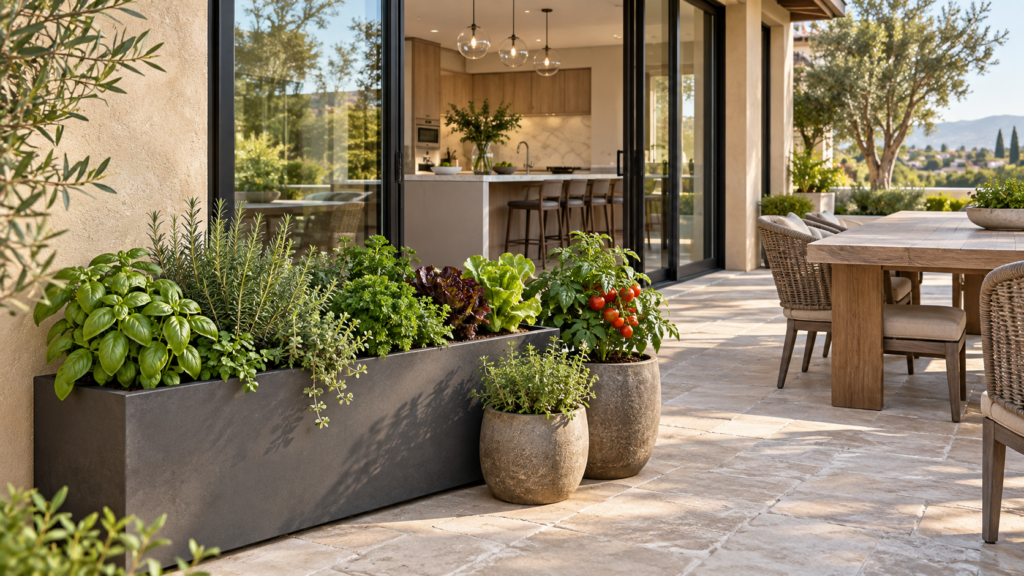
A decorative planter does not have to be purely ornamental. A box near the kitchen or outdoor dining area can hold herbs, leafy greens, or compact vegetables when the location provides the right growing conditions.
UC Master Gardeners of Orange County notes that many vegetables and herbs can grow successfully in containers. Match the container size to the mature plant and use a potting mix intended for containers.
11. Use the Thriller-Filler-Spiller Formula
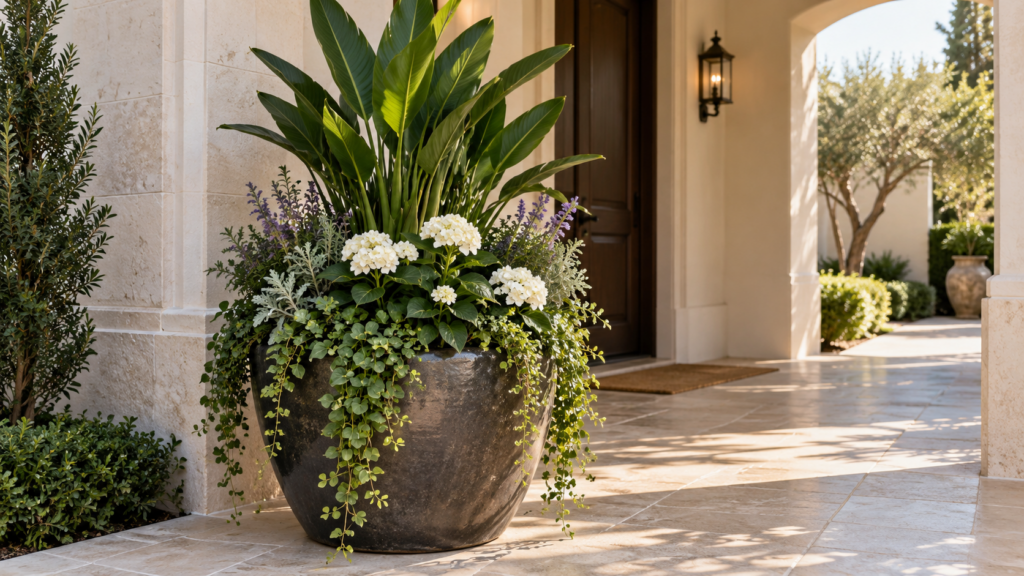
For a mixed decorative container, the classic “thriller-filler-spiller” approach uses one taller focal plant, lower plants that fill the middle, and trailing plants that soften the edge.
The more important rule is compatibility. Plants sharing one container should have similar light and watering needs.
Before You Buy a Planter: Check These Six Things
A good planter should fit the way you actually use the space, not just look good in a store photo.
- Measure the location. Leave room for doors, gates, seating, and walking paths.
- Check the light. Note morning sun, intense afternoon sun, filtered light, or shade.
- Match the container to the mature plant. Larger plants generally need more root space.
- Confirm drainage. UC Master Gardeners advises that drainage holes are important; gravel at the bottom does not replace them.
- Think about weight. Large planters can become extremely heavy when filled with soil and water.
- Be realistic about maintenance. More containers can mean more watering, trimming, cleanup, and seasonal replacement.
Container plants can dry out faster than plants in the ground. UC guidance notes that larger containers generally dry more slowly, which can be helpful in warm, sunny conditions.
How Planter Boxes Can Help With Curb Appeal
Planter boxes work best for curb appeal when they support the architecture rather than compete with it. A pair of healthy planters near the entry, a clean window box, or a simple rectangular planter along a patio can make the property feel more cared for and visually complete.
That does not mean planters automatically increase a home’s value or that every seller should buy new ones. If you are preparing to sell, the better question is whether the outdoor presentation feels clean, proportional, maintained, and easy for a buyer to understand.
Wilted plants, cracked pots, dead foliage, mineral-stained containers, or too many mismatched planters can create the opposite impression. Sometimes removing clutter and keeping only the strongest containers is the better choice.
Planters can also work well with other exterior details. Thoughtful outdoor lighting can help an entry or patio remain visually appealing after sunset as part of a broader exterior presentation.
A Simple Approach for Irvine and Orange County Homes
You do not need a large yard to use planter boxes well. In Irvine homes with compact patios, courtyards, balconies, or smaller front setbacks, containers can add greenery without requiring a major landscape project. On larger properties, they can help create scale around entrances, patios, pools, and hardscape areas.
Start with one area that feels unfinished, choose a container that fits the scale, then select plants for that specific light and watering environment.
If you are thinking about selling, look at the entire exterior through a buyer’s eyes. Planters are only one part of presentation; landscaping, paint condition, lighting, pathways, entry details, and overall maintenance work together.
FAQs About Decorative Planter Boxes
What is the best material for an outdoor planter box?
There is no single best material for every home. Wood offers warmth, metal can look modern, resin and fiberglass can be lighter, and ceramic or stone-look planters can add visual weight. Choose based on style, sun exposure, durability, weight, and maintenance.
Do planter boxes need drainage holes?
Yes, containers used for live plants generally need drainage. UC Master Gardeners of Orange County advises that containers should have drainage holes and that a gravel layer at the bottom does not make up for a lack of drainage.
Are bigger planter boxes easier to maintain?
Often, yes. Larger containers hold more soil, give roots more room, and generally dry out more slowly than small pots. They are also heavier, so consider placement and whether the planter may need to be moved.
What should I put in planter boxes near a front door?
Choose plants that fit the amount of light at the entry and stay neat at their mature size. Simple combinations often work well: one architectural plant, a repeated flowering variety, or a restrained thriller-filler-spiller arrangement.
Should I add planter boxes before selling my home?
Only if they improve the presentation. Healthy, appropriately scaled planters can make an entry or patio feel more welcoming, but neglected or overcrowded containers may distract from the home. Focus first on cleanliness, maintenance, proportion, and overall curb appeal.
Make the Outdoor Space Feel Intentional
The strongest planter-box ideas are not necessarily the most elaborate. A well-placed pair at the front door, a long box that softens a hard wall, or a compact herb planter near the kitchen may do more for the space than a large collection of mismatched pots.
Start with the problem you want to solve, then choose the container and plants around that purpose. The result should make the home easier to enjoy now and, if you sell later, help the exterior feel thoughtfully presented.
If you are thinking about selling a home in Irvine, Newport Beach, Newport Coast, South Orange County, or nearby coastal Orange County, I would be happy to help you look at your home through a buyer’s eyes and talk through what may be worth addressing before you go on the market.
Tony Babarino
Irvine Real Estate Broker with REAL Broker
Serving Irvine, Newport Beach, and surrounding Orange County communities
California DRE#01717758
TonyBabarino.com
Call/Text: (949) 633-6741

Disclaimer: This article is for general educational information only and is not horticultural, construction, structural, legal, HOA, safety, or other professional advice. Plant suitability, mounting methods, drainage needs, structural loads, HOA requirements, and property conditions can vary by home and situation. Consult the appropriate qualified professional, nursery professional, contractor, HOA, or other authority when needed. If your property is currently listed or you are already represented by another real estate broker, this is not intended as a solicitation.
Want more Irvine real estate insights, helpful homeowner tips, and original videos in your Google experience? Add TonyBabarino.com as a Preferred Source.