

Remodel for Daily Comfort First — Then Think About Resale Appeal
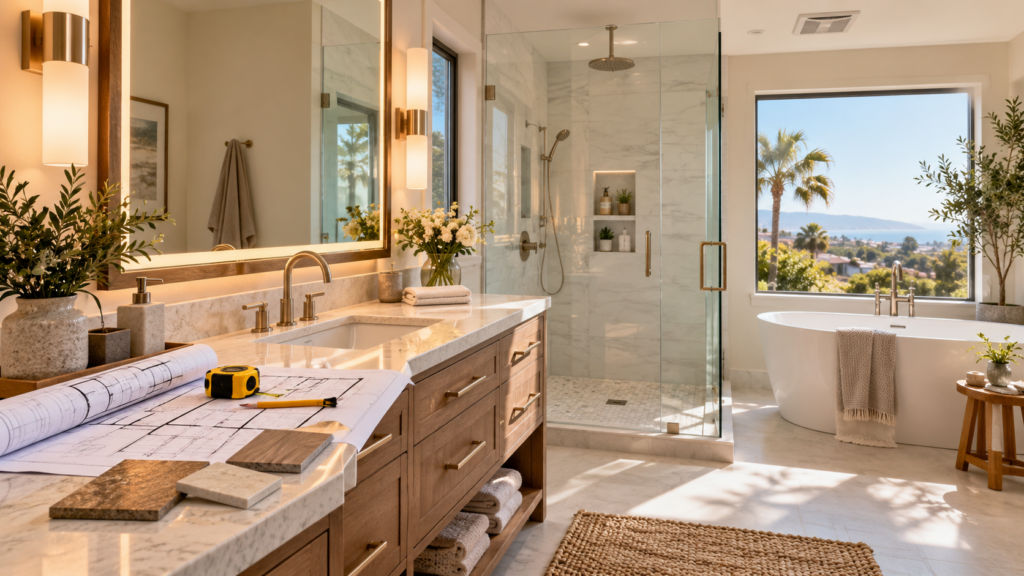
A bathroom remodel can improve the way a home feels every morning, make the room easier to maintain, and help a future buyer understand the space more quickly.
But the smartest bathroom remodels usually start before the tile, faucet, mirror, or vanity is selected.
Layout, lighting, ventilation, storage, moisture control, clearances, water use, and long-term usability can matter just as much as the finishes.
Written by Tony Babarino, Irvine Real Estate Broker with REAL Broker, serving Irvine, Newport Beach, and surrounding Orange County communities. DRE#01717758.
For Irvine and surrounding Orange County homeowners, there is another reason to think carefully before spending heavily: a bathroom renovation does not automatically pay for itself at resale. The National Association of REALTORS® 2025 Remodeling Impact Report estimated national cost recovery for a bathroom renovation at about 50%. The same report also found that bathroom renovation was one of the remodeling categories in which REALTORS® had seen increased buyer demand. That is a useful reminder to balance daily enjoyment, functionality, maintenance, and future presentation instead of remodeling only for an assumed return.
National Association of REALTORS® — 2025 Remodeling Impact Report
Key Takeaways
- Start with layout, ventilation, lighting, moisture control, storage, and clearances before choosing finishes.
- A bathroom remodel may improve buyer appeal, but no specific project guarantees a higher sale price or full cost recovery.
- Current California building standards took effect January 1, 2026, and bathroom work involving plumbing, electrical, ventilation, structure, or other regulated systems may require permits or inspections depending on the scope.
- In Irvine, certain like-for-like fixture replacements may not require a permit, while relocated or altered plumbing and larger remodel work can trigger permit requirements.
- EPA WaterSense-labeled toilets and showerheads can reduce water use while meeting performance criteria.
- Ventilation matters: EPA recommends bathroom exhaust be vented directly outdoors, not into an attic or other enclosed space.
- Slip-resistant surfaces, better lighting, grab bars, and easier shower access can improve long-term usability without making a bathroom look institutional.
- If resale is part of the plan, think about how the bathroom looks, photographs, functions, and answers buyer questions.
The 15 Bathroom Remodel Tips at a Glance
- Position the toilet out of immediate view
- Preserve quality vintage finishes when they still work
- Use layered lighting instead of one harsh fixture
- Confirm clearances before ordering fixtures
- Choose a comfortable vanity height
- Use space-saving fixtures in small bathrooms
- Choose a tub that fits the room instead of overpowering it
- Pick a vanity for storage and proportion, not just appearance
- Spend strategically instead of making every finish expensive
- Dry-fit tile and verify the layout before installation
- Think carefully before removing the home’s only bathtub
- Check permits, contractor licensing, and written-contract requirements
- Prioritize ventilation and moisture control
- Consider WaterSense-labeled fixtures
- Add long-term usability features that still look intentional
The details behind each decision are where a remodel either becomes easier to live with—or starts creating regrets.
1. Position the Toilet Out of Immediate View
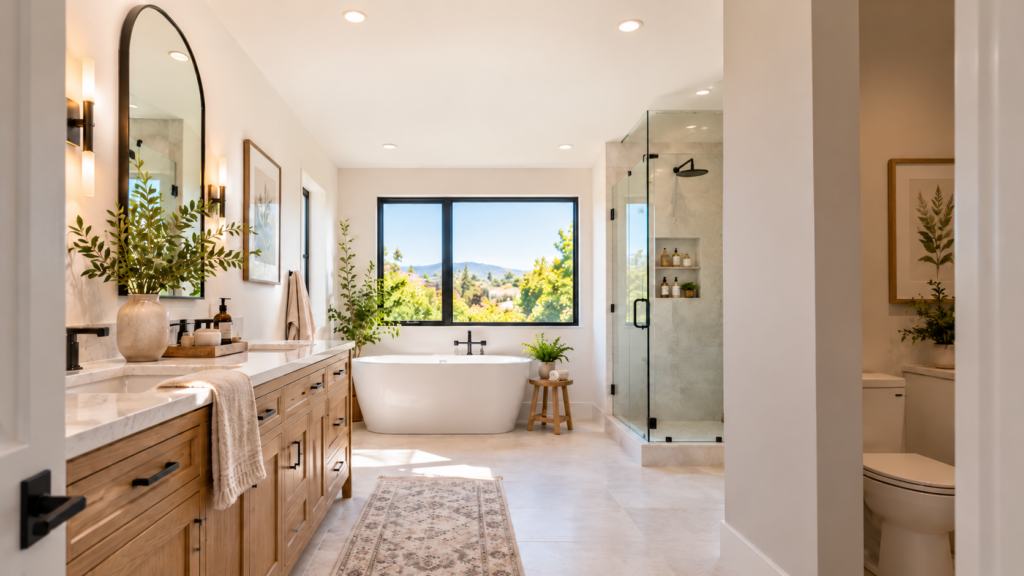
When the layout allows it, avoid making the toilet the first thing someone sees when the bathroom door opens.
This is especially useful in primary bathrooms, powder rooms, and bathrooms that may eventually be photographed for a future listing.
Possible approaches include:
- a partial privacy wall;
- a separate water closet where space supports it;
- changing the door swing;
- positioning the vanity, shower, tub, or window as the first focal point.
This is primarily a layout and presentation decision. Moving a toilet can involve plumbing changes, so the cost and technical implications should be evaluated before changing the floor plan.
2. Preserve Quality Vintage Finishes When They Still Work
Not every older bathroom needs to be demolished.
A well-maintained cast-iron tub, original tile, quality woodwork, or other period detail may add character when it fits the home and remains in good condition.
The distinction is usually between intentional vintage and visibly worn or failing.
Ask:
- Is the finish in good condition?
- Is grout or caulking failing?
- Are there signs of moisture or deterioration?
- Does the feature fit the architecture of the home?
- Can the room be refreshed around it rather than completely replaced?
This can be especially relevant in older Orange County homes where removing every original detail may erase some of the property’s character.
3. Use Layered Lighting Instead of One Harsh Fixture

A single ceiling fixture often leaves a bathroom feeling flat or creates unflattering shadows at the mirror.
A more thoughtful lighting plan may include:
- ambient lighting for general illumination;
- task lighting around the mirror;
- accent lighting for visual warmth;
- night lighting or low-level toe-kick lighting for easier nighttime use.
Lighting can also influence resale presentation. Bathrooms that are bright, evenly lit, and easy to photograph may come across more clearly online and during showings.
Electrical work and lighting requirements can depend on the project, product, location, and current code, so a qualified electrician or appropriate professional should evaluate installation details.
4. Confirm Clearances Before You Buy Anything
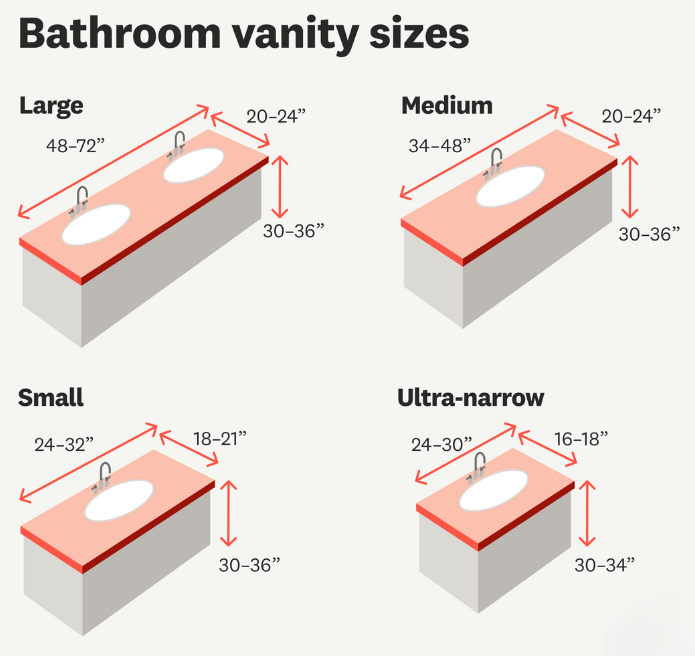
A vanity, toilet, shower door, tub, or cabinet can fit on a drawing and still make the room uncomfortable.
Before ordering major fixtures, check how people will actually move through the space.
Look at:
- bathroom-door swing;
- shower-door swing;
- vanity depth;
- toilet clearances;
- drawer and cabinet openings;
- towel-bar placement;
- walkways;
- door and trim conflicts;
- access around plumbing fixtures.
The 2025 California Building Standards Code is now the current edition and became effective January 1, 2026. Specific clearance, plumbing, electrical, ventilation, and other requirements can vary by project type and scope, so homeowners should verify current requirements with the applicable city and qualified professionals.
California Building Standards Commission — Current Codes
5. Choose a Comfortable Vanity Height
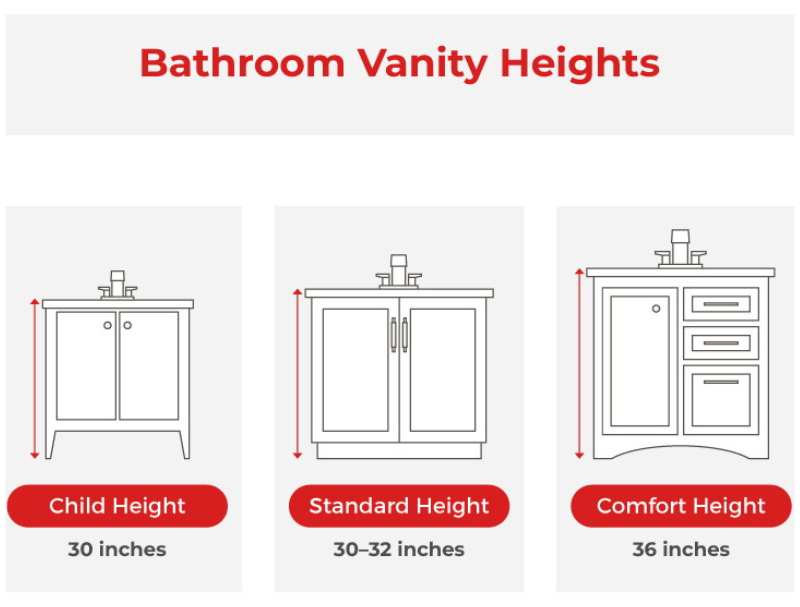
A vanity that looks good can still feel wrong if the finished counter and sink height do not suit the people using it.
This becomes especially important with vessel sinks because the sink itself adds height above the countertop.
Before ordering, consider:
- who uses the bathroom most;
- whether it is a primary, guest, children’s, or powder bathroom;
- sink style;
- countertop thickness;
- finished height;
- mirror and outlet placement.
Comfort is personal. Measure the finished combination, not only the cabinet.
Thinking About a New Vanity Countertop?
Bathroom counters do not have to default to one material. Quartz, quartzite, porcelain, marble, sintered surfaces, and other materials each have different maintenance and fabrication considerations.
See: New Countertop Options That Homeowners Need to Know
6. Use Space-Saving Fixtures in Small Bathrooms
Small bathrooms benefit from restraint.
A compact vanity, wall-mounted sink, corner sink, shallow-depth cabinet, or carefully placed wall storage may free floor area and reduce awkward traffic.
The goal is not to squeeze in every possible feature.
It is to make the bathroom feel easy to use.
A slightly smaller vanity with better drawers can sometimes be more functional than a larger cabinet that crowds the room.
7. Choose a Tub That Fits the Room Instead of Overpowering It

A freestanding soaking tub may look impressive in a large bathroom, but it can make a smaller room feel crowded.
A compact soaking tub, alcove tub, or other appropriately scaled option may preserve bathing functionality while leaving more room for storage, circulation, or a larger shower.
Before choosing a tub, think about:
- who will actually use it;
- ease of getting in and out;
- cleaning access around it;
- floor space;
- water capacity and hot-water demand;
- whether keeping a tub matters for future household needs.
Bigger is not automatically better.
8. Pick a Vanity for Storage and Proportion, Not Just Appearance
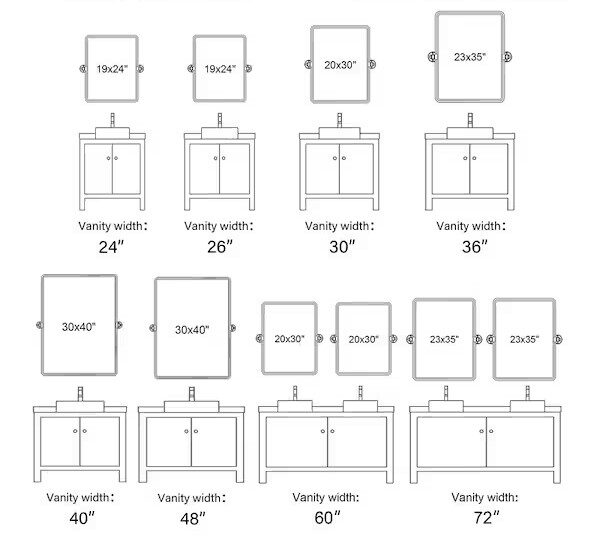
The vanity is one of the largest visual elements in most bathrooms, so proportion matters.
Too small and storage may suffer.
Too large and the bathroom can feel tight.
Possible approaches include:
- floating vanities for visual openness;
- drawer-heavy designs for easier organization;
- narrow-depth vanities in tighter rooms;
- double vanities only where the room comfortably supports them;
- recessed medicine cabinets when wall conditions permit.
Think about where daily items will actually go. A beautiful counter covered with toiletries because there is no useful storage can quickly become frustrating.
9. Spend Strategically Instead of Making Every Finish Expensive
A good bathroom does not require the most expensive version of every component.
Consider putting more attention into the features people see and touch most frequently:
- shower glass;
- vanity;
- countertop;
- tile;
- faucets;
- lighting;
- mirror;
- cabinet hardware;
- door hardware.
Then use simpler, durable choices in areas that do not need to be a focal point.
This can also help avoid over-improving a bathroom far beyond the rest of the home.
For homeowners remodeling partly with resale in mind, the 2025 NAR Remodeling Impact Report is a useful reality check: its national estimate for bathroom-renovation cost recovery was about 50%, not 100%.
That does not mean “do not remodel.” It means the remodel should ideally create value for you now as well as potential buyer appeal later.
10. Dry-Fit Tile and Verify the Layout Before Installation
Tile can look completely different once cuts, grout lines, niches, drains, corners, and edges enter the picture.
Before installation begins, review the intended layout with the installer.
Look at:
- where full tiles begin and end;
- small sliver cuts;
- grout-joint spacing;
- niche location;
- drain alignment;
- pattern centering;
- edge trim;
- transitions between materials;
- tile orientation.
A few minutes spent discussing layout can prevent details that become difficult or expensive to change later.
Waterproofing and shower construction are technical building-system issues. They should be designed and installed using the appropriate current requirements, manufacturer instructions, and qualified professionals rather than relying solely on general remodeling advice.
11. Think Carefully Before Removing the Home’s Only Bathtub
Walk-in showers are popular for good reasons.
They can feel open, modern, and easier to enter, particularly when designed with a lower threshold.
But before removing a bathtub, consider the entire home.
If another bathroom already has a tub, converting one tub to a larger shower may be an easy decision.
If it is the only bathtub in the home, some future buyers may prefer that one remain—particularly households with young children or buyers who simply enjoy baths.
That does not mean every home must have a tub. Buyer preferences vary.
It simply means the decision deserves more thought than, “We never use it.”
Useful shower features may include:
- low-threshold entry;
- recessed niche;
- built-in or fold-down bench;
- handheld showerhead;
- thoughtfully placed controls;
- appropriate grab bars;
- slip-resistant flooring;
- properly designed glass.
The technical design of a curbless or low-threshold shower can involve drainage, waterproofing, framing, floor elevation, and structural considerations. Those details should be evaluated by the appropriate qualified professionals.
12. Check Permits, Contractor Licensing, and Written-Contract Requirements
This is one of the most important updates to the article.
Irvine Permit Rules Depend on the Scope
The City of Irvine currently lists certain like-for-like replacements of toilets and sinks as work that may not require a permit when there is no valve or fixture relocation and the work otherwise conforms to applicable requirements.
By contrast, adding, relocating, repairing, or altering plumbing can trigger permit requirements, and larger remodels may involve building, plumbing, electrical, or mechanical permits.
City of Irvine — Apply for a Permit
City of Irvine — Residential Remodels/Additions
California Contractor Rules Have Two Different Dollar Thresholds
These are easy to confuse.
The California Contractors State License Board currently states that a contractor generally must hold a valid CSLB license when the project:
- requires a building permit;
- uses employee labor; or
- costs $1,000 or more in combined labor and materials.
The $1,000 minor-work exemption took effect January 1, 2025. It applies only when the job does not require a permit and the unlicensed individual does not employ workers.
CSLB — What Kind of Contractor Do You Need?
Separately, CSLB states that California home-improvement projects over $500 require a written home-improvement contract.
That written contract should clearly address the scope of work, materials, payment schedule, permits, changes, contractor information, and other required terms. CSLB also states that the down payment on a home-improvement contract generally cannot exceed $1,000 or 10% of the contract price, whichever is less.
CSLB — Home Improvement Contracts
These are legal and regulatory requirements, so homeowners should rely on current CSLB and local-agency information rather than an old remodeling checklist.
13. Prioritize Ventilation and Moisture Control
Ventilation may be one of the least exciting parts of a bathroom remodel, but it can have an outsized effect on how the room performs.
EPA guidance for bathroom remodeling says exhaust should remove moisture directly to the outdoors, not into an attic or other enclosed space.
U.S. EPA — Remodeling Your Home and Indoor Air Quality
Current California building standards also include mechanical-ventilation requirements for rooms containing bathtubs, showers, spas, and similar bathing fixtures. How those requirements apply to an existing-home remodel depends on the scope and jurisdiction.
Useful features to discuss with the appropriate professional may include:
- properly sized exhaust fan;
- quieter fan;
- humidity sensor;
- timer control;
- exterior venting;
- accessible fan controls.
If a bathroom already shows staining, persistent condensation, a musty odor, peeling finishes, or signs of leaks, address the underlying moisture source instead of simply covering it with paint or caulk.
EPA’s mold guidance emphasizes moisture control as the key to controlling indoor mold growth.
U.S. EPA — Mold, Moisture and Your Home
14. Consider WaterSense-Labeled Fixtures
Water-efficient fixtures do not necessarily mean poor performance.
EPA says WaterSense-labeled tank-type toilets use 1.28 gallons per flush or less and must meet WaterSense performance and efficiency criteria.
U.S. EPA — WaterSense Residential Toilets
For showerheads, WaterSense-labeled products use no more than 2.0 gallons per minute and must also meet performance criteria for spray force and coverage.
U.S. EPA — WaterSense Showerheads
For an Orange County bathroom remodel, water efficiency can be one practical part of the fixture-selection process alongside comfort, appearance, maintenance, and product quality.
Always confirm the exact product specifications and current local requirements.
15. Add Long-Term Usability Features That Still Look Intentional
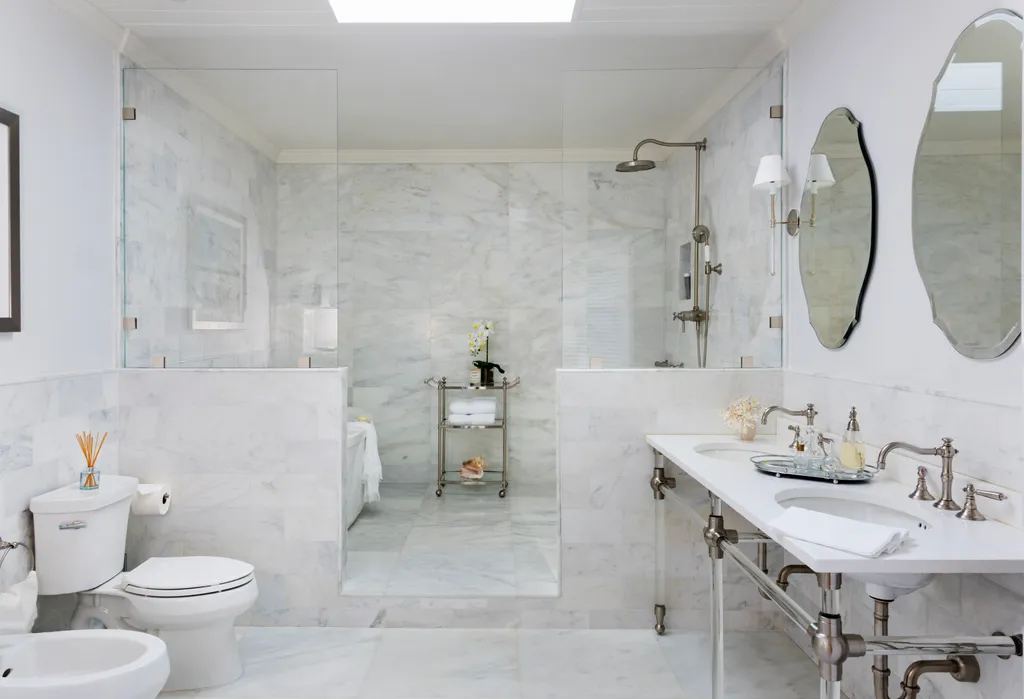
A bathroom can be designed for easier use without looking institutional.
Features that may support long-term usability include:
- low-threshold or appropriately designed curbless shower;
- grab bars that coordinate with the fixtures;
- wall blocking for possible future grab bars;
- shower bench;
- handheld showerhead;
- slip-resistant flooring;
- better lighting;
- uncluttered pathways;
- easier-to-use hardware and controls.
CDC fall-prevention guidance recommends bathroom grab bars and better home lighting as ways to make the home safer for older adults.
CDC — Preventing Falls and Hip Fractures
The goal is not to predict anyone’s future needs.
It is to recognize that a bathroom that is easier to navigate can be useful for children, guests, injured household members, older relatives, and homeowners who plan to remain in the property longer.
Quick Bathroom Remodel Planning Table
| Goal | Remodel Choices to Consider | Why It May Matter |
|---|---|---|
| Better daily comfort | Layered lighting, practical storage, comfortable vanity height | Can make everyday routines easier |
| Better moisture control | Proper exterior-vented exhaust, leak correction, appropriate materials | Helps manage bathroom humidity and moisture |
| Better use of a small room | Compact vanity, wall-mounted storage, carefully scaled fixtures | Can preserve usable floor space |
| Lower water use | WaterSense-labeled toilets and showerheads | Reduces fixture water consumption while meeting EPA criteria |
| Long-term usability | Better lighting, grab bars, bench, lower-threshold shower | May make the bathroom easier for more people to use |
| Future resale presentation | Cohesive finishes, good lighting, clean grout, useful storage | May help buyers understand and appreciate the room |
| Avoiding over-improvement | Match the project to the home and likely buyer | Helps keep spending in perspective |
Before Remodeling for Resale, Remember the 50% Number
The 2025 NAR Remodeling Impact Report estimated 50% cost recovery for a bathroom renovation nationally.
That is not an Irvine-specific forecast, and it does not predict what your individual remodel will return.
It does illustrate an important point:
A $50,000 bathroom remodel should not automatically be treated as a $50,000 increase in home value.
The actual effect can depend on:
- the condition of the bathroom before remodeling;
- quality of the work;
- neighborhood and price range;
- whether the design fits the home;
- buyer preferences;
- market conditions when the property is sold;
- whether the remodel corrected a real functional problem;
- how much was spent.
For some homeowners, the strongest reason to remodel is that they plan to enjoy the bathroom for years.
For someone selling soon, a smaller refresh can sometimes make more sense than a full renovation.
What This Means If You Are Thinking About Selling
A dated bathroom does not automatically mean you should remodel it before listing.
Sometimes the better pre-sale improvements are much smaller:
- improve lighting;
- repair obvious defects;
- refresh caulking where appropriate;
- clean or restore grout;
- replace a worn mirror;
- update dated cabinet hardware;
- replace a visibly tired fixture;
- improve organization;
- repaint;
- professionally clean the room.
The right answer depends on the home.
When I walk through a property with a seller, I am looking at what buyers are likely to notice, what may create unnecessary hesitation, and where spending money may—or may not—make sense.
If you are thinking about selling a home in Irvine or Orange County, I would be happy to walk through the home with you before you spend money on a remodel and help you think about the project from a buyer and resale perspective.
Helpful Resources
National Association of REALTORS® — 2025 Remodeling Impact Report
Current national remodeling research covering homeowner satisfaction, buyer demand, and estimated cost recovery.
NAR Remodeling Impact
California Contractors State License Board
Current contractor licensing and home-improvement contract rules.
CSLB — Hiring a Contractor
City of Irvine — Permits and Inspections
Current local permit information for Irvine residential projects.
City of Irvine Permits
California Building Standards Commission
Current California Building Standards Code.
California Building Standards Code
U.S. EPA — WaterSense
Water-efficiency and performance information for toilets, showerheads, and other fixtures.
EPA WaterSense
U.S. EPA — Bathroom Ventilation and Moisture
General bathroom-remodel ventilation and moisture-control information.
EPA Indoor Air Quality and Remodeling
Final Thoughts
A bathroom remodel can be a great project when it improves the way the home works for the people living there.
The most useful improvements are not always the flashiest.
Good lighting, better ventilation, practical storage, thoughtful layout, moisture control, comfortable fixtures, and long-term usability can matter every day.
And if the home is sold later, those same qualities may help the bathroom feel easier for buyers to understand and appreciate.
Remodel for the way you live.
Spend thoughtfully.
Verify the technical details.
And if resale is part of the decision, consider the entire home—not just the bathroom.
Tony Babarino
Irvine Real Estate Broker with REAL Broker
Serving Irvine, Newport Beach, and surrounding Orange County communities
California DRE#01717758
TonyBabarino.com
Call/Text: (949) 633-6741

Disclaimer: This article is for general homeowner and real-estate educational information only. Tony Babarino is providing general homeowner and real-estate information and is not acting as a contractor, plumber, electrician, engineer, architect, building-code official, home inspector, mold/remediation professional, accessibility specialist, attorney, or other technical or licensed trade professional. Permit requirements, code requirements, contractor licensing, HOA requirements, plumbing and electrical requirements, ventilation, waterproofing, structural conditions, product suitability, installation methods, costs, resale impact, and buyer preferences can vary by property, jurisdiction, project scope, current law or code, and individual circumstances. Do not alter structural, electrical, plumbing, waterproofing, ventilation, or other building systems based solely on this article. Verify current requirements and project-specific conditions with the appropriate government agency and qualified professionals before beginning work. If your property is currently listed or you are already represented by another real estate broker, this is not intended as a solicitation.
FAQs About Bathroom Remodeling
What bathroom remodel updates may help with resale appeal?
Updates that improve overall condition, lighting, ventilation, storage, functionality, and visual consistency may help a bathroom present better to buyers. There is no guaranteed return, and a smaller refresh may make more sense than a full renovation depending on the home and market.
Does a bathroom remodel pay for itself when the home is sold?
Not necessarily. The National Association of REALTORS® 2025 Remodeling Impact Report estimated national cost recovery for a bathroom renovation at about 50%. Actual resale impact varies by property, project cost, workmanship, design, market conditions, and buyer preferences.
Should I remove a bathtub and replace it with a walk-in shower?
It depends on the home and household. If another bathtub remains, converting one tub to a shower may fit the home well. If it is the only bathtub, some future buyers may prefer that a tub remain. There is no universal rule.
Do bathroom remodels require permits in Irvine?
Some do. The City of Irvine currently lists certain like-for-like toilet and sink replacements as work that may not require a permit when there is no fixture or valve relocation. Plumbing alterations, electrical work, ventilation changes, structural work, and larger remodel scopes may require permits. Verify the current requirement for the specific project with the City.
Does a California bathroom contractor need a license?
California generally requires a valid CSLB contractor license when the project requires a building permit, uses employee labor, or costs $1,000 or more in combined labor and materials. A limited minor-work exemption may apply below $1,000 only when no permit is required and no employees are used.
Does a California bathroom remodel need a written contract?
CSLB states that home-improvement projects over $500 require a written home-improvement contract. The contract should address the scope, materials, payment schedule, permits, contractor information, changes, and other required terms.
Are WaterSense toilets and showerheads worth considering?
They may be. EPA WaterSense-labeled toilets use 1.28 gallons per flush or less, while labeled showerheads use no more than 2.0 gallons per minute. WaterSense products must also meet applicable EPA performance criteria.
Should a bathroom exhaust fan vent into the attic?
EPA guidance says bathroom exhaust should be vented directly to the outdoors rather than into an attic or other enclosed space. Project-specific installation and code requirements should be confirmed with the appropriate qualified professional.
Is a curbless shower always a good idea?
No single shower design is right for every bathroom. A curbless or lower-threshold shower can improve access, but the design may involve waterproofing, drainage, floor elevation, framing, and other technical considerations that should be evaluated for the specific property.
Should I remodel my bathroom before selling my Irvine home?
Not automatically. Depending on the bathroom’s condition, a smaller refresh—such as improved lighting, cleaning, paint, grout or caulk attention, hardware, mirrors, or fixture updates—may be more practical than a full remodel. A pre-sale walkthrough can help determine what may be worth addressing before spending money.
Want more Irvine real estate insights, helpful homeowner tips, and original videos in your Google experience? Add TonyBabarino.com as a Preferred Source.