
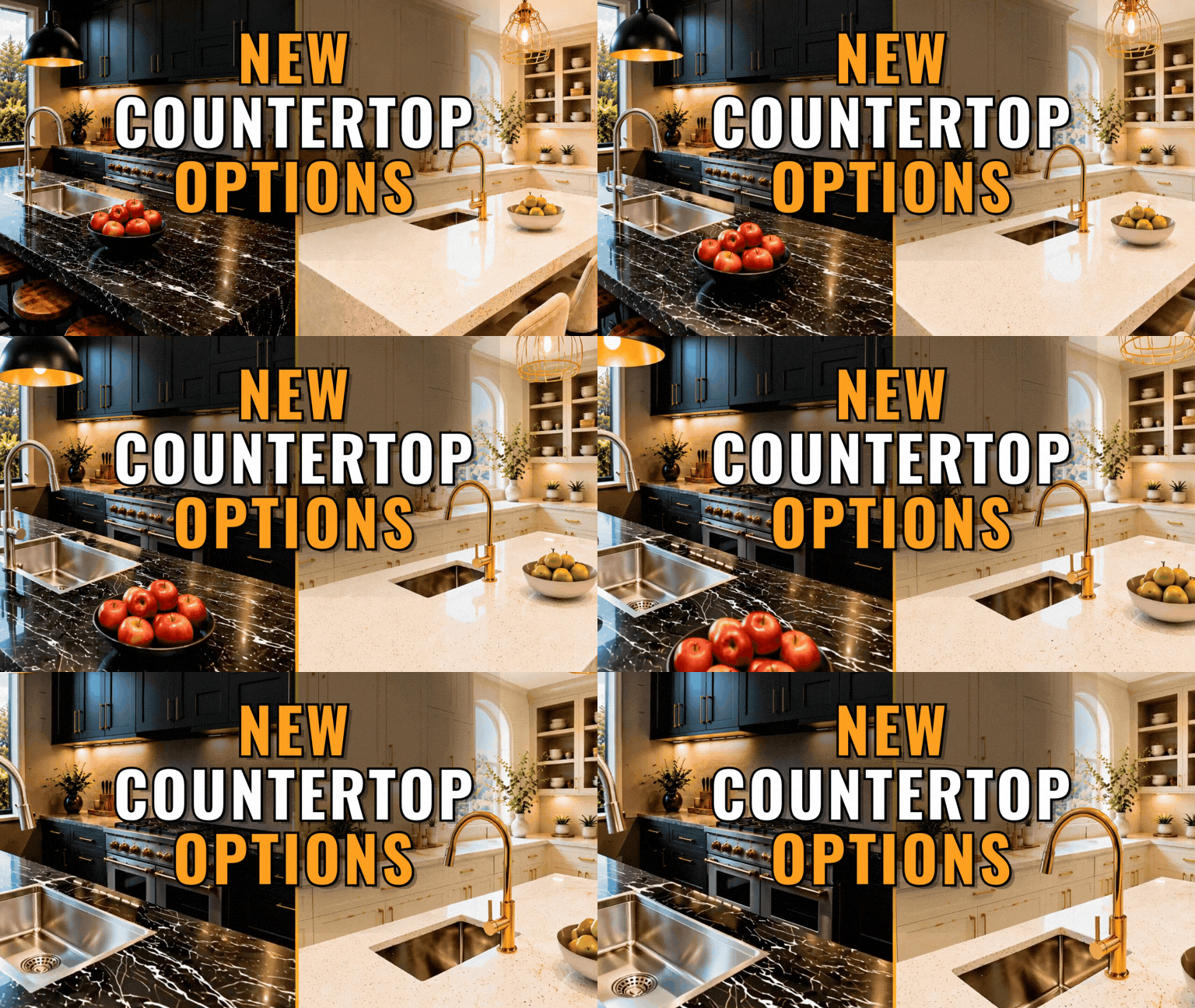
Quartz countertops are still popular, practical, and appropriate in many homes. But in luxury kitchens, the better question is no longer, “Is quartz good?” The better question is, “Is quartz the most distinctive, responsible, and future-ready choice for this home?”
For homeowners in Irvine, Newport Beach, Newport Coast, and coastal Orange County, countertop selection can influence more than daily use. It can shape the entire feel of a kitchen, affect how buyers perceive quality, and help a home feel either custom and intentional—or familiar and expected.
Quartz became widely used because it offered consistency, stain resistance, and a polished “stone-like” look. Those benefits still matter. However, luxury homeowners are now looking more closely at originality, material sourcing, fabrication quality, silica awareness, indoor-outdoor performance, sustainability, and long-term design value.
Key Takeaways
- Quartz remains a valid option, but it is no longer the only high-end countertop choice.
- Luxury homeowners may want to compare quartz with natural quartzite, marble, porcelain slabs, sintered stone, soapstone, stainless steel, recycled glass, terrazzo, and low-silica mineral surfaces.
- Respirable crystalline silica concerns are mainly tied to cutting, grinding, polishing, and fabrication dust—not normal use of an installed countertop. OSHA explains that respirable crystalline silica is created when materials such as stone, concrete, brick, and artificial stone are cut, sawed, ground, drilled, or crushed.
- California has taken additional steps around artificial stone worker safety, and in May 2026 the California Occupational Safety and Health Standards Board voted to begin a process that could prohibit fabrication and installation of artificial stone products containing more than 1% crystalline silica.
- For luxury resale, the best countertop is not always the most expensive one. It is the material that fits the architecture, lifestyle, maintenance expectations, and buyer perception of the home.
Why Some Luxury Homeowners Are Reconsidering Quartz
Quartz became popular because it solved real problems. It offered predictable color, consistent slabs, strong stain resistance, and easier maintenance than many natural stones.
But popularity can cut both ways.
When a material appears in entry-level remodels, production homes, apartment communities, flip projects, and high-end kitchens at the same time, it can start to lose some of its luxury distinction. That does not mean quartz looks bad. It simply means quartz may not always communicate the same level of rarity, craftsmanship, or custom design that luxury buyers often expect.
In a high-end home, especially in areas such as Newport Coast, Crystal Cove, Shady Canyon, Turtle Rock, Turtle Ridge, Orchard Hills, and coastal Orange County, buyers often notice whether a kitchen feels designed around the home—or assembled from familiar finishes.
That is where alternatives become interesting.
Quartz Is Not One Thing
One important point homeowners sometimes miss: “quartz” countertops are not natural quartz slabs. They are engineered surfaces.
The U.S. International Trade Administration describes certain quartz surface products as slabs and surfaces made from a mixture that includes predominantly silica, such as quartz or quartz powder, plus a resin binder. The same trade scope specifically excludes quarried stone surface products such as granite, marble, soapstone, and quartzite.
That distinction matters because quartz, quartzite, and natural stone are often discussed as if they are variations of the same product. They are not.
Quartz is engineered. Quartzite is natural stone. Marble is natural stone. Soapstone is natural stone. Porcelain slabs and sintered stone are manufactured surfaces with different compositions, performance profiles, and fabrication requirements.
The luxury decision is not simply “quartz versus stone.” It is a broader question of design intent, performance, maintenance, provenance, worker safety, and future buyer perception.
Current Facts Homeowners Should Know About Quartz, Trade, and Availability
Quartz pricing and availability have also been affected by trade actions. In January 2025, the U.S. International Trade Commission determined that existing antidumping and countervailing duty orders on quartz surface products from China would remain in place. In December 2025, the USITC also determined that existing orders on quartz surface products from India and Turkey would remain in place.
For most homeowners, this does not mean quartz is unavailable. It means the quartz category has been shaped by global manufacturing, trade policy, pricing pressure, and supply-chain complexity.
For luxury homeowners, the takeaway is simple: ask better questions. Where is the material made? What is in it? What safety data sheet is available? Who is fabricating it? What is the warranty? Is the material likely to feel timeless, or does it feel tied to a short design cycle?
The Silica Issue: Important, But Easy to Misunderstand
Silica awareness is one of the biggest reasons some homeowners are pausing before choosing traditional engineered quartz.
The key issue is not generally living with a finished countertop. The issue is worker exposure to respirable crystalline silica dust during fabrication, cutting, grinding, polishing, and installation.
NIOSH reported in January 2026 that countertop fabricators working with engineered stone are at risk of silicosis because engineered stone, also known as artificial stone or quartz, typically contains over 90% respirable crystalline silica content. OSHA and NIOSH also updated their hazard alert for workers who manufacture, finish, and install natural and engineered stone countertops.
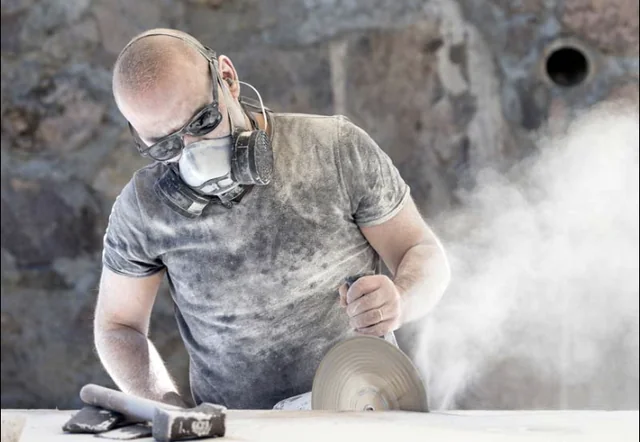
California data makes this issue especially relevant locally. In a November 2025 health advisory, the California Department of Public Health reported 432 confirmed silicosis cases among California countertop workers since 2019, including at least 25 deaths and 48 lung transplants. CDPH also listed Orange County among counties with confirmed cases.
Australia has already gone further. Safe Work Australia states that, as of July 1, 2024, the manufacture, supply, processing, and installation of engineered stone benchtops, panels, and slabs is banned across Australian jurisdictions when the product meets the engineered-stone definition, including at least 1% crystalline silica and resin or other constituents.
This does not mean every homeowner must avoid every quartz product. It does mean luxury homeowners may reasonably ask more careful questions about fabrication safety, silica content, sourcing, and alternatives.
Countertop Alternatives Luxury Homeowners Should Consider
The best luxury countertop choice depends on how the home is used. A show kitchen, family kitchen, catering kitchen, bar, outdoor kitchen, prep kitchen, and primary bath may not need the same surface.
Here are options worth considering.
| Material | Best For | Luxury Advantage | What to Watch |
|---|---|---|---|
| Natural quartzite | Kitchens needing beauty and durability | One-of-a-kind veining with strong natural-stone presence | Usually needs sealing; confirm true quartzite, not mislabeled marble |
| Marble | Classic luxury kitchens, baking areas, statement islands | Timeless, elegant, recognizable luxury | Can etch, stain, and patina |
| Dolomite | Softer marble-like look | Elegant veining, sometimes more durable than marble | Still may etch and needs proper care |
| Granite | Durable kitchens, outdoor-friendly applications depending on stone | Natural variation, heat resistance, broad range | Some patterns feel dated; choose carefully |
| Soapstone | Warm, tactile kitchens, historic or organic designs | Soft matte look, natural patina, heat tolerance | Scratches more easily; limited color range |
| Porcelain slabs | Modern kitchens, full-height backsplashes, outdoor areas | Thin profile, UV resistance, large-format design | Edge details and fabrication quality are critical |
| Resin-free sintered stone | Indoor-outdoor continuity, high-performance surfaces | Durable, modern, often strong for heat/UV applications | Verify composition, silica content, resin status, and fabricator experience |
| Low-silica mineral surfaces | Homeowners who like quartz performance but want newer formulations | Familiar look with reduced crystalline silica content | Ask for current product-specific safety data |
| Solid surface | Seamless counters, integrated sinks, utility areas | Clean, modern, repairable, smooth transitions | Can scratch and scorch more easily than stone |
| Recycled glass or crushed glass | Sustainability-focused designs | Color, light reflection, distinctive story | Pattern may not fit every luxury interior |
| Terrazzo | Custom, architectural kitchens or baths | Highly customizable, design-forward | Needs expert installation and sealing depending on binder |
| Stainless steel | Chef kitchens, prep kitchens, catering spaces | Professional, hygienic, durable | Scratches and patinas visibly |
| Wood or butcher block | Islands, breakfast bars, accent zones | Warmth, contrast, organic character | Needs maintenance; not ideal everywhere |
| Concrete | Modern architectural homes | Custom shape, thickness, color, texture | Can crack, stain, or require sealing |
| Onyx, semi-precious stone, or backlit stone | Bars, powder rooms, wine rooms, feature walls | Dramatic luxury impact | Often better as a feature surface than a heavy-use kitchen worktop |
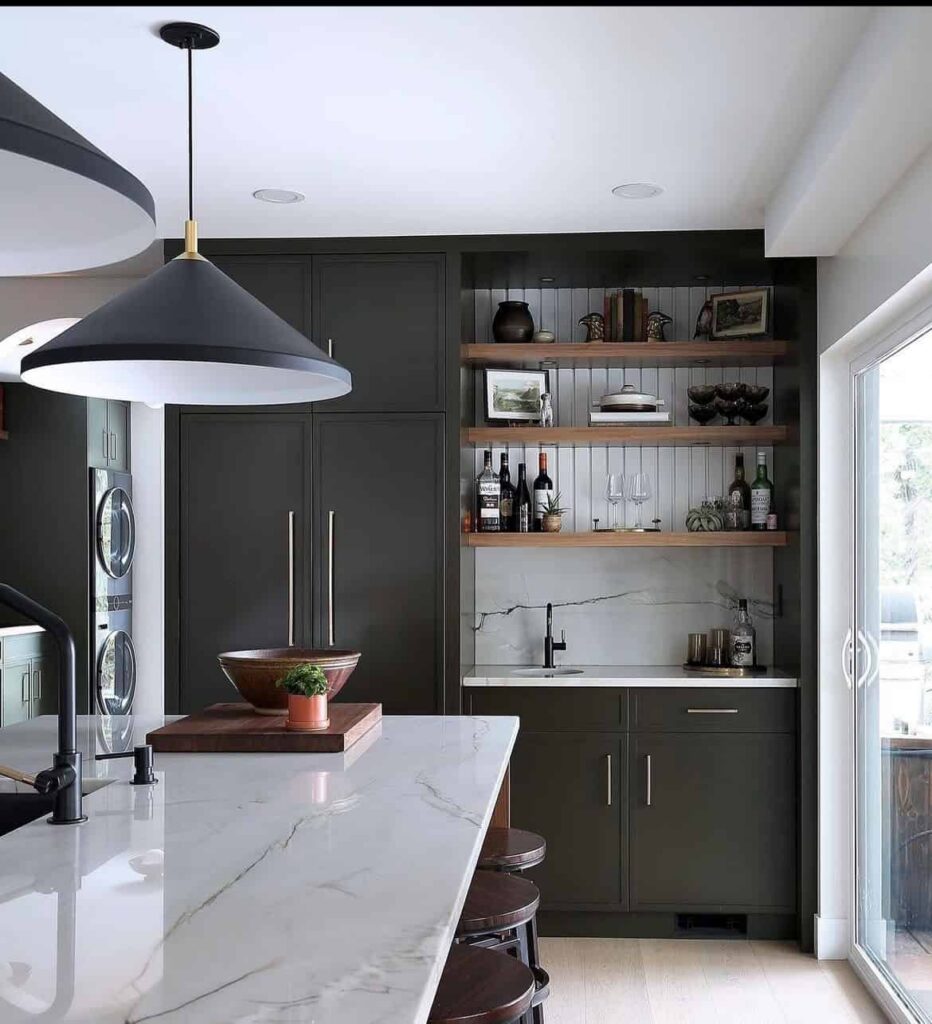
Natural Quartzite: The Luxury Alternative Many Buyers Notice
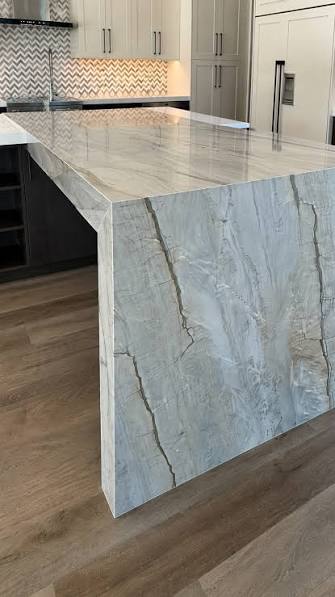
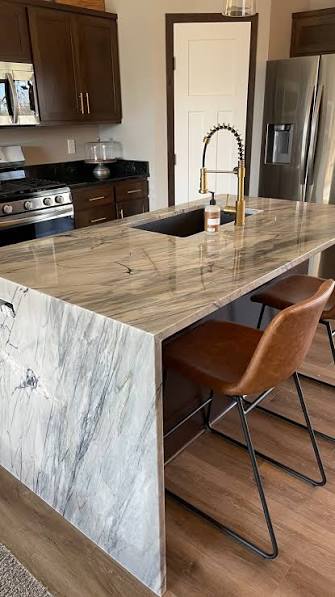
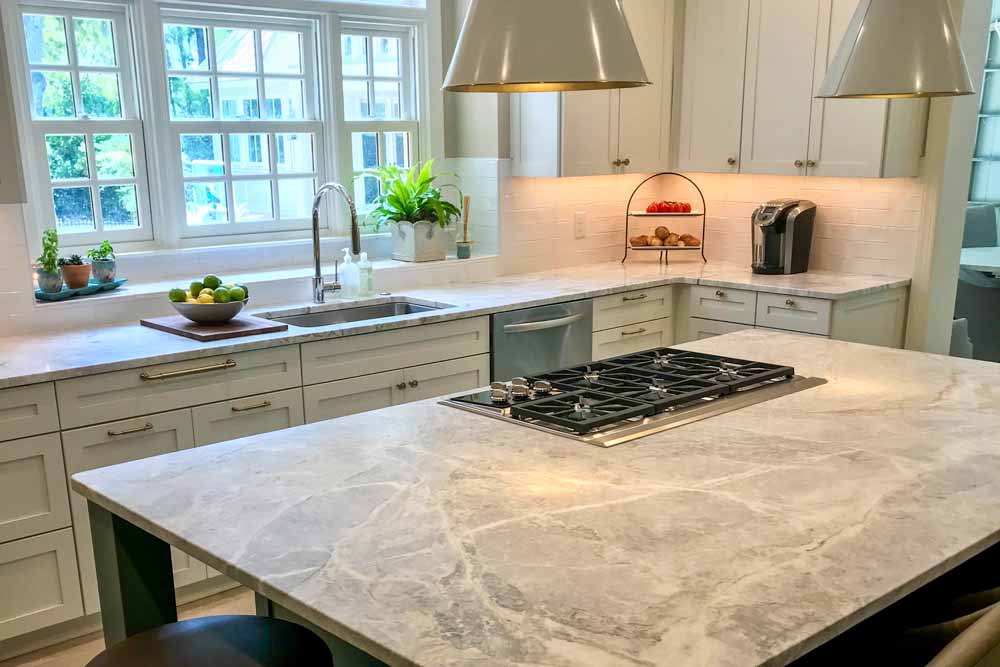
Natural quartzite has become one of the strongest alternatives for homeowners who want the movement of marble with more practical durability. Natural Quartzite is an incredibly hard, naturally occurring metamorphic rock formed from sandstone and intense heat. Highly sought after for its elegant, marble-like veining and exceptional durability, it frequently outperforms granite in strength and scratch resistance.
It often works beautifully in luxury kitchens because each slab feels unique. A well-selected quartzite island can become the visual anchor of the room, especially when paired with a slab backsplash, waterfall edge, or bookmatched stone.
Quartzite can be a strong choice when the homeowner wants:
- Natural variation
- A marble-like look without choosing marble
- Better day-to-day durability than many softer stones
- A custom, less mass-market feel
- A material that photographs and presents well online
The caution is that some stones are mislabeled in the marketplace. A homeowner should ask the stone yard, designer, and fabricator whether the slab is true quartzite, whether it needs sealing, and how it performs with acidic foods, oils, heat, and daily use.
Marble: Still Luxury, But Best for the Right Homeowner
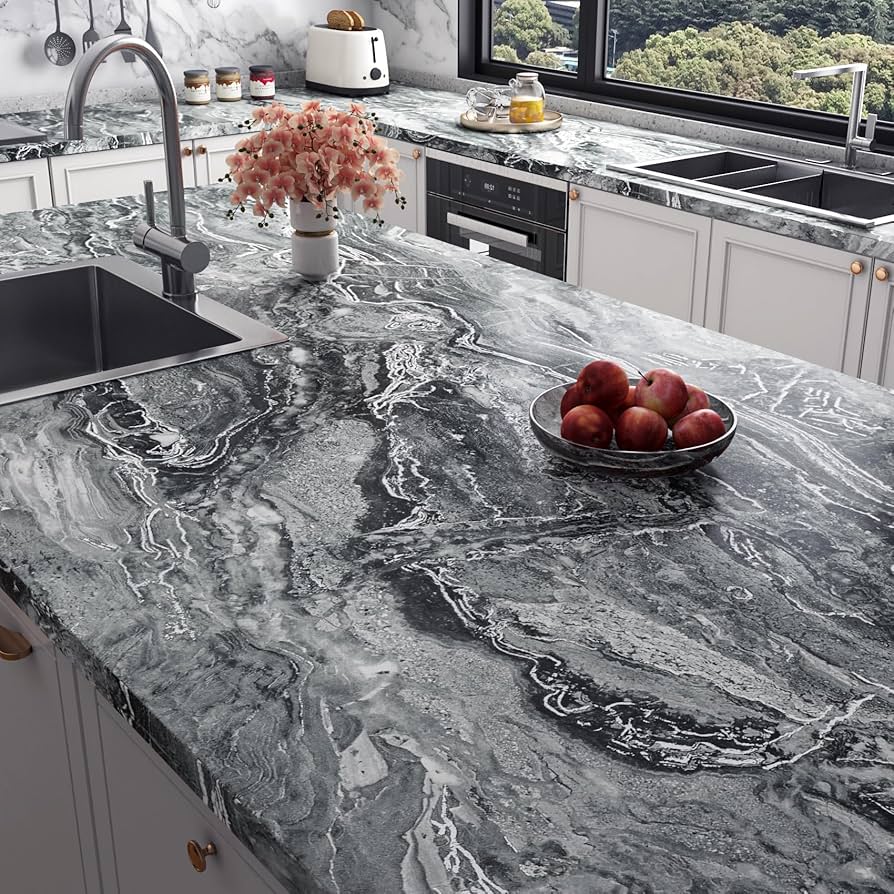
Marble remains one of the most beautiful countertop materials in the world. It can make a kitchen feel established, architectural, and timeless.
But marble is not for everyone.
It can etch from lemon juice, wine, vinegar, and other acidic substances. It can stain if not sealed and cared for properly. Some luxury homeowners love that patina because it feels European, lived-in, and authentic. Others want a surface to look nearly perfect years later.
The mistake is not choosing marble. The mistake is choosing marble without understanding how it ages.
Marble may be best for:
- Formal kitchens
- Baking stations
- Islands where beauty matters more than perfection
- Butler’s pantries
- Primary bath vanities
- Homes with classic, Mediterranean, traditional, or coastal European design language
Porcelain Slabs and Resin-Free Sintered Stone
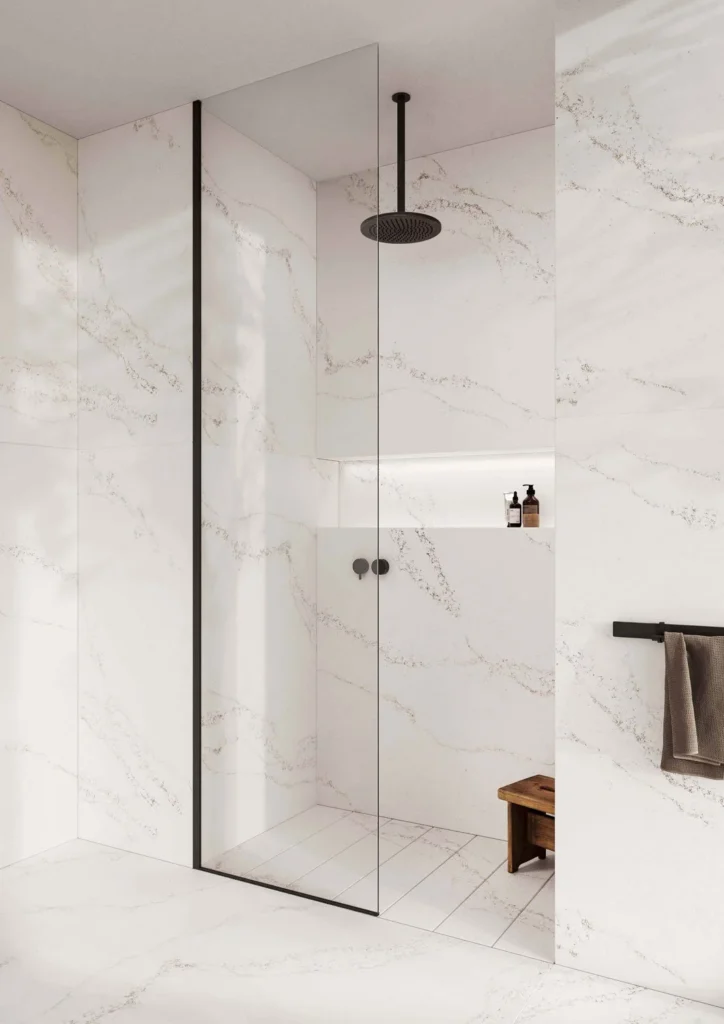
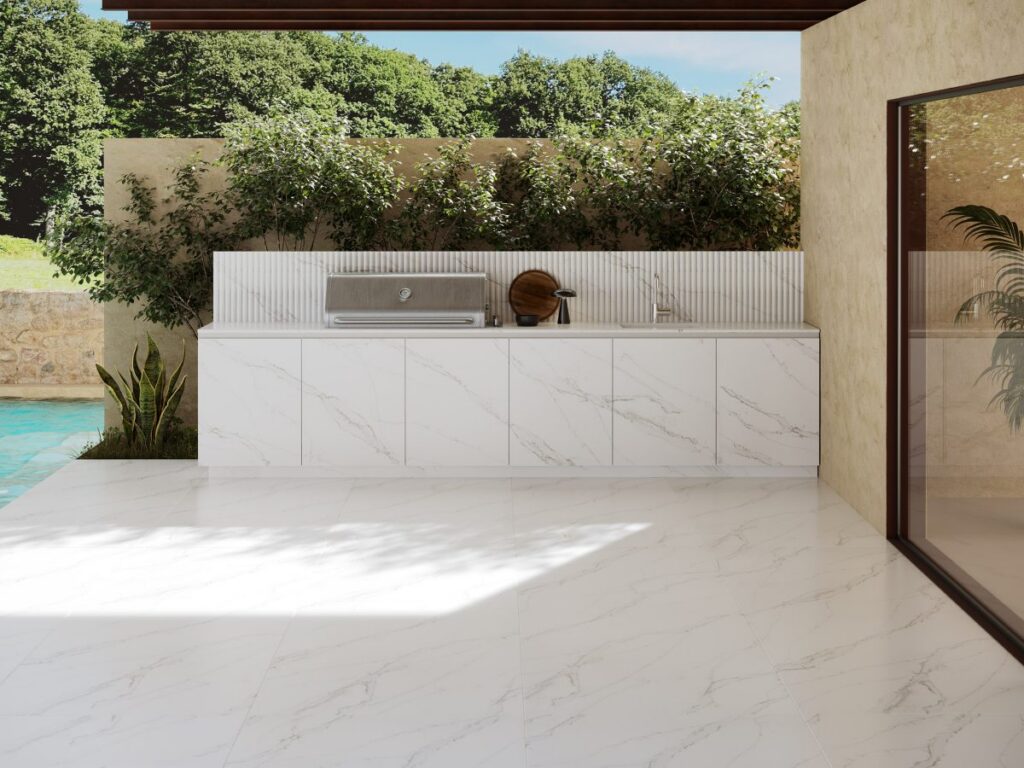
Porcelain slabs and sintered stone have become especially relevant for luxury homeowners because they can create a clean, architectural look with large-format slabs, full-height backsplashes, and indoor-outdoor design continuity.
Safe Work Australia’s engineered-stone ban specifically excludes porcelain products and sintered stone provided they do not contain resin, which is one reason these categories are receiving more attention in discussions about alternatives.
These materials may work well for:
- Modern kitchens
- Outdoor kitchens
- Fireplace surrounds
- Shower walls
- Full-height slab backsplashes
- Waterfall islands
- Homes with strong indoor-outdoor living
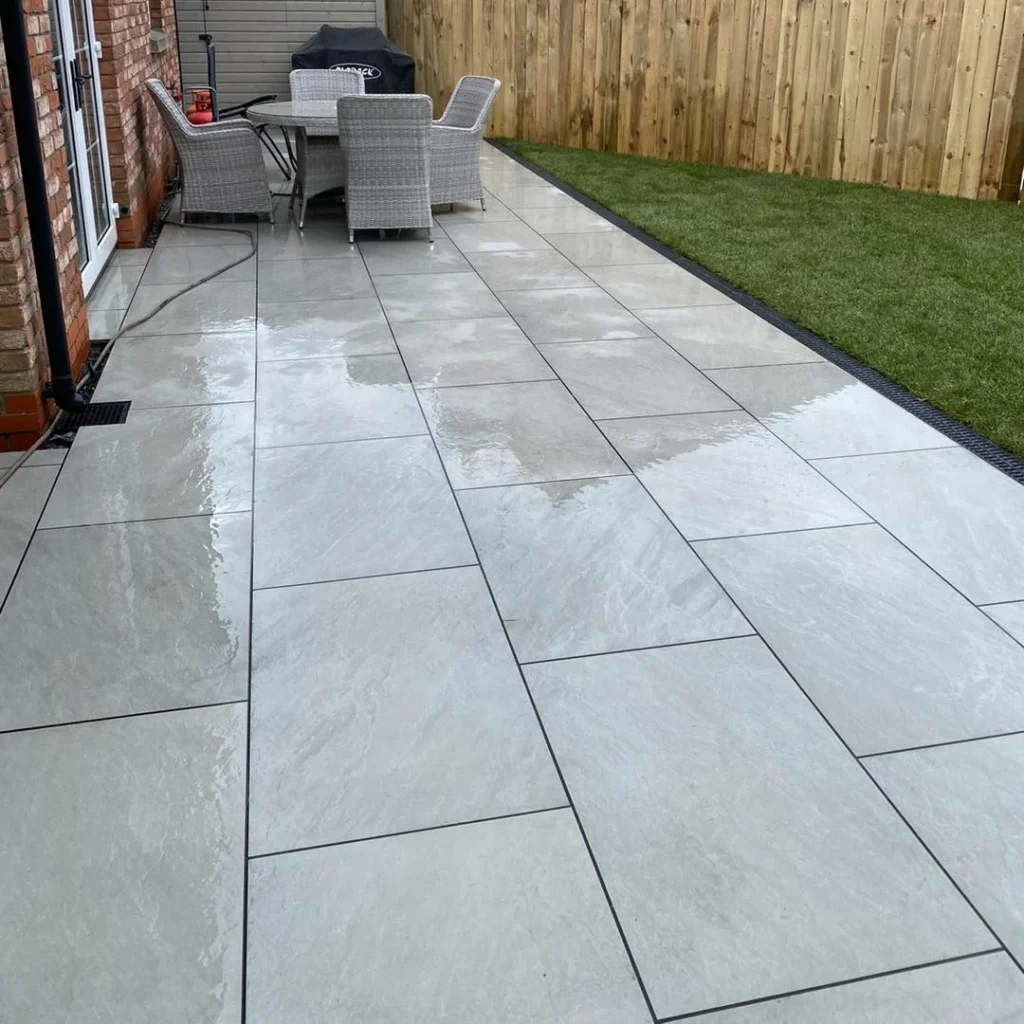
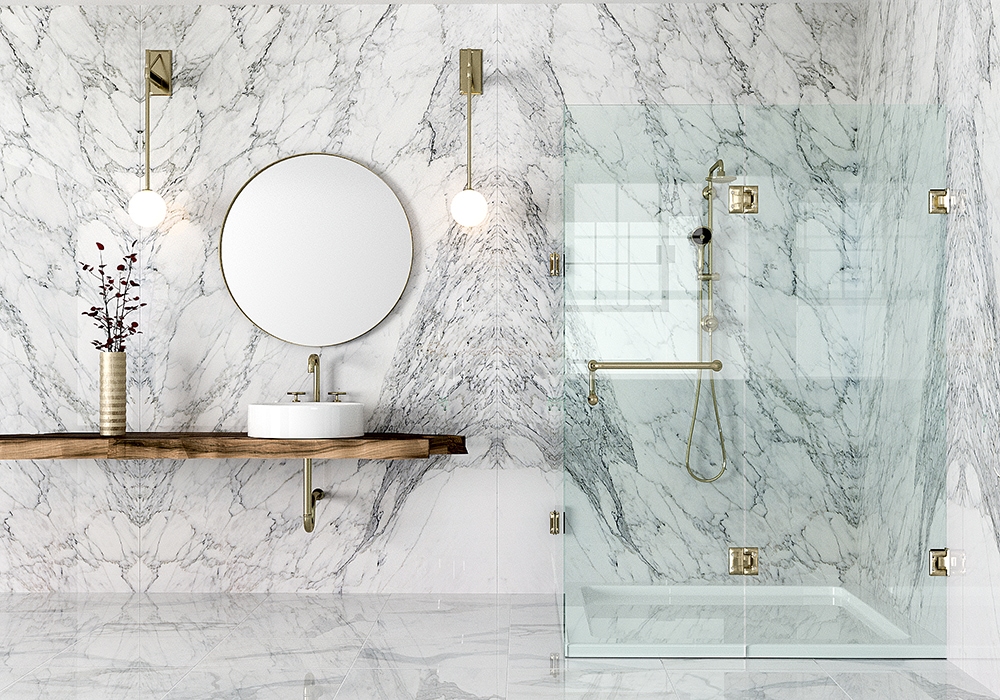
However, fabrication quality matters. Thin slabs, mitered edges, large cutouts, and waterfall returns require experienced installers. A beautiful slab can lose its luxury feel if the seams, edges, or bookmatching are handled poorly.
Low-Silica Mineral Surfaces: A Newer Middle Ground
Some homeowners still like the look and practicality of quartz but want updated formulations.
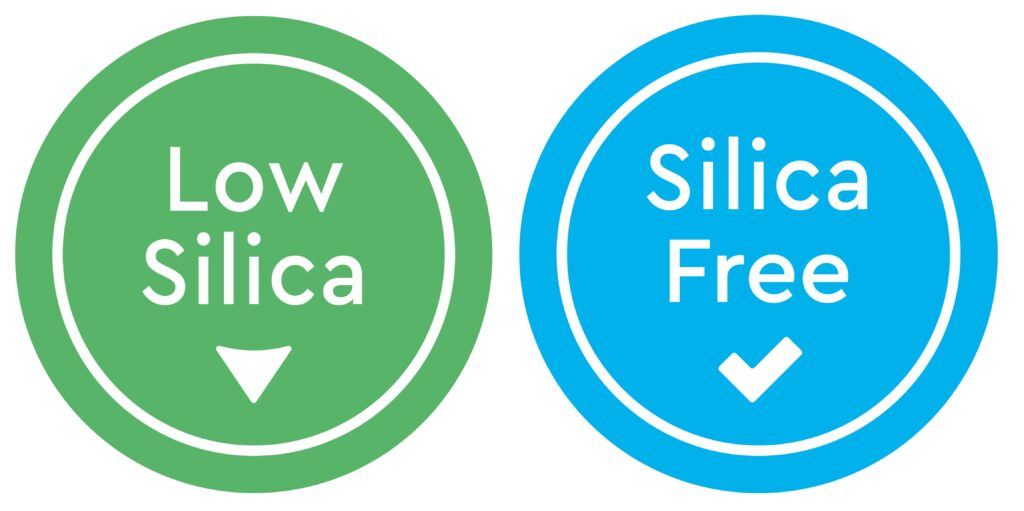
Manufacturers have responded. Cosentino describes Silestone as a low-silica mineral surface made with premium minerals and recycled materials, and states that some lines are labeled at maximum 40% crystalline silica or maximum 10% crystalline silica. Caesarstone states that its newer mineral surfaces contain less crystalline silica than regular quartz, with slabs containing less than 40% crystalline silica and, in some cases, less than 10%.
These products may be worth considering for homeowners who want:
- A quartz-like maintenance profile
- More predictable patterns than natural stone
- Lower-silica alternatives compared with traditional engineered quartz
- A surface category that may be evolving with worker-safety concerns
The important step is to verify the current safety data sheet for the exact product and color. Do not assume every product within a brand or category has the same composition.
Recycled Glass, Terrazzo, and Crushed Glass Surfaces
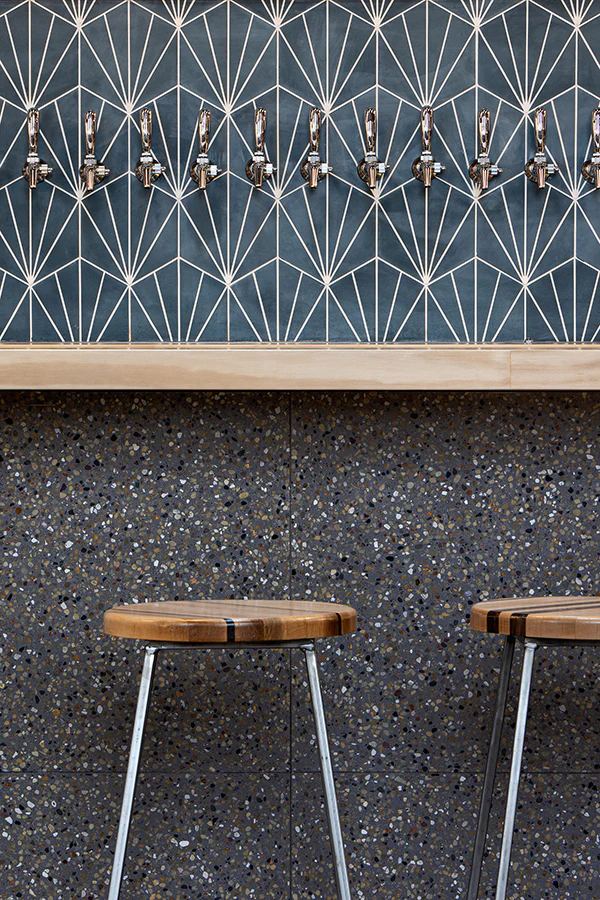
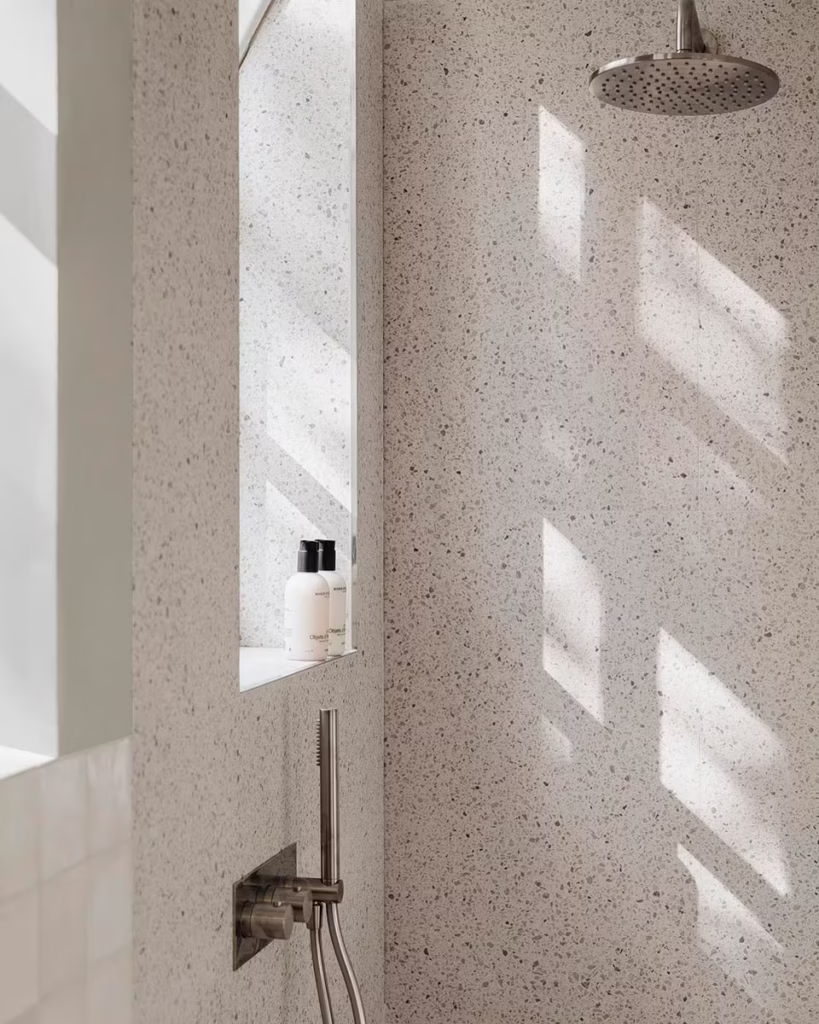
For luxury homeowners who want a stronger sustainability story, recycled glass and terrazzo can be compelling.
These materials can add color, depth, texture, and individuality. They may work especially well in:
- Bar areas
- Laundry rooms
- Pool houses
- Guest baths
- Creative kitchens
- Contemporary homes
- Secondary prep spaces
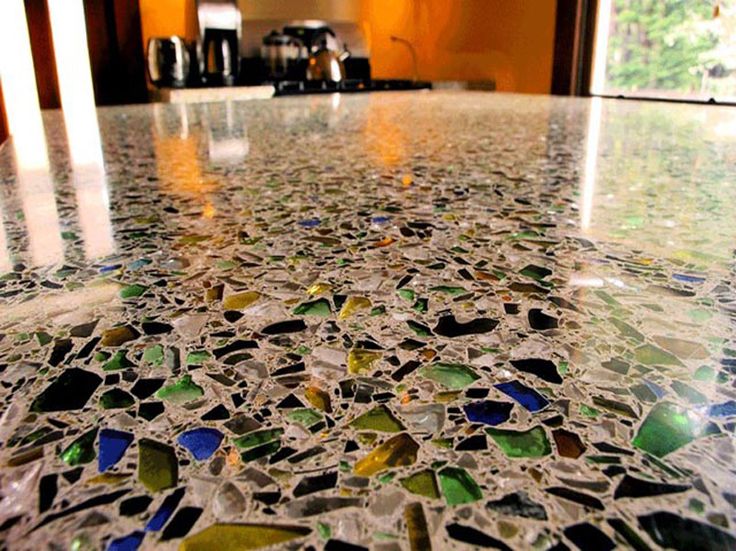
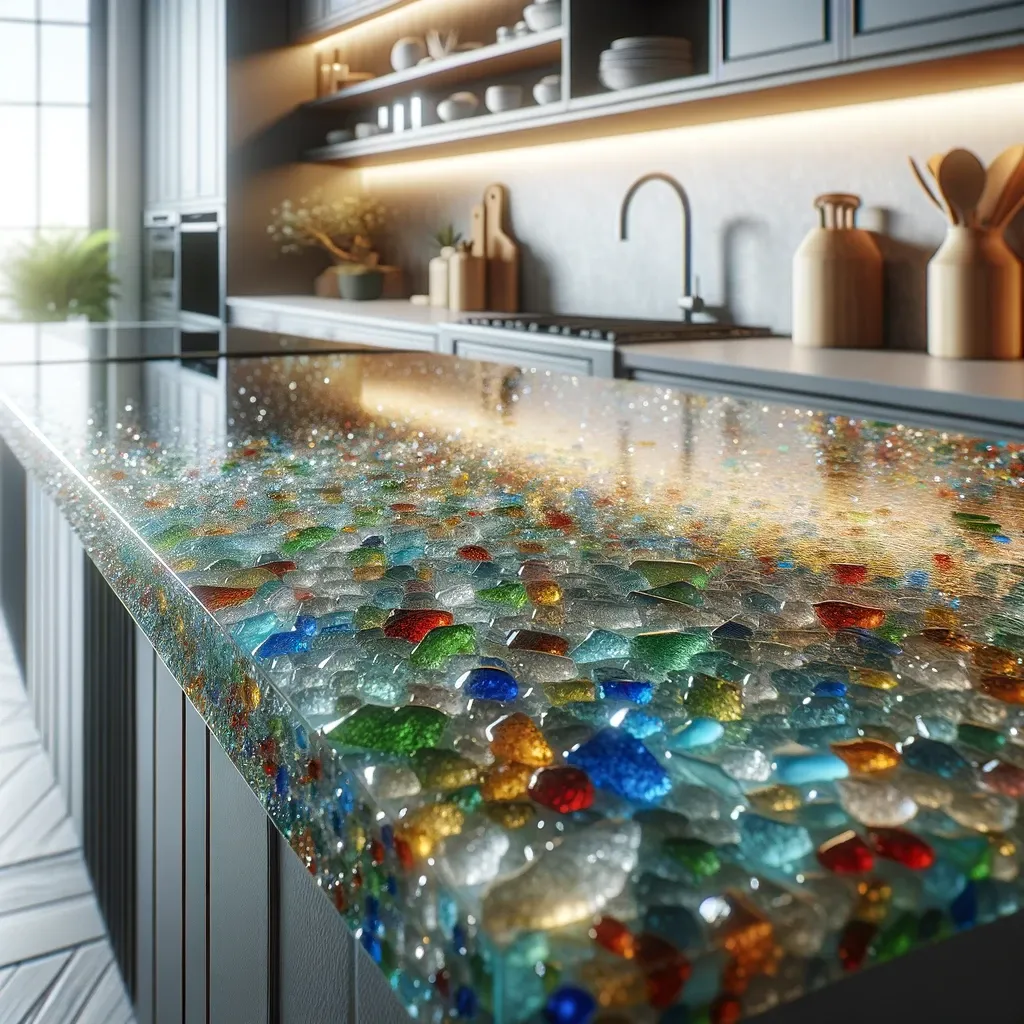
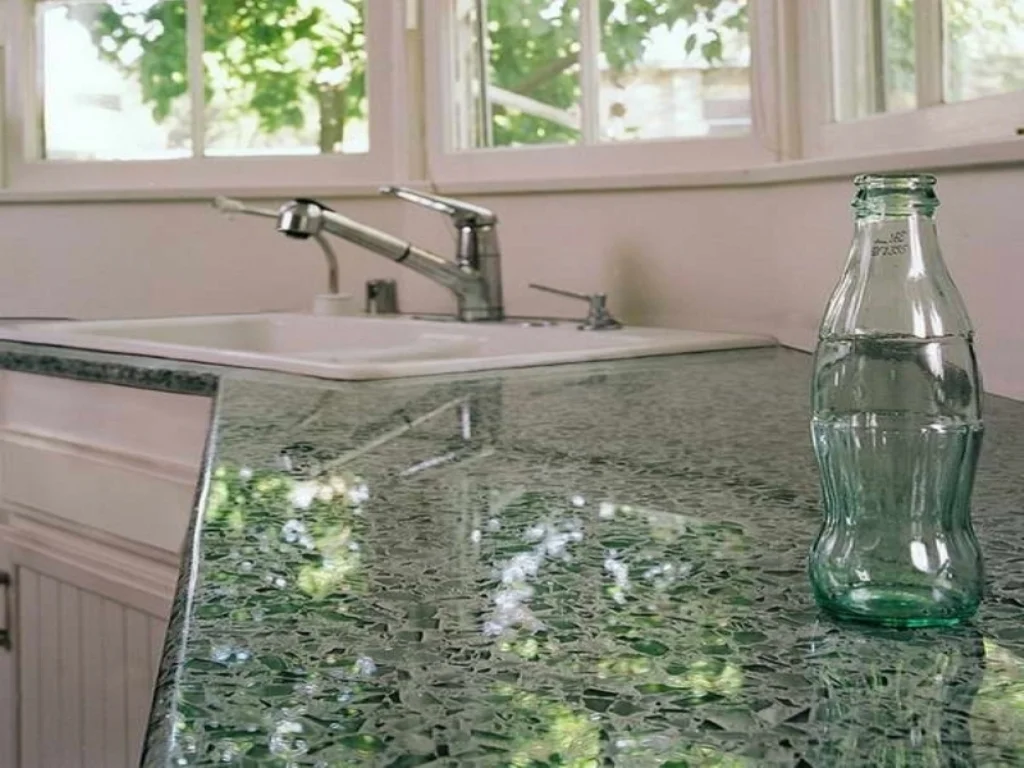
The U.S. International Trade Administration’s quartz-surface scope notes that quarried stone such as granite, marble, soapstone, and quartzite is excluded from the quartz orders, and certain crushed glass products may also fall outside the quartz scope when they meet specific criteria.
That does not automatically make crushed glass the right choice for every luxury kitchen, but it shows why material composition matters.
Stainless Steel, Wood, and Mixed-Material Kitchens
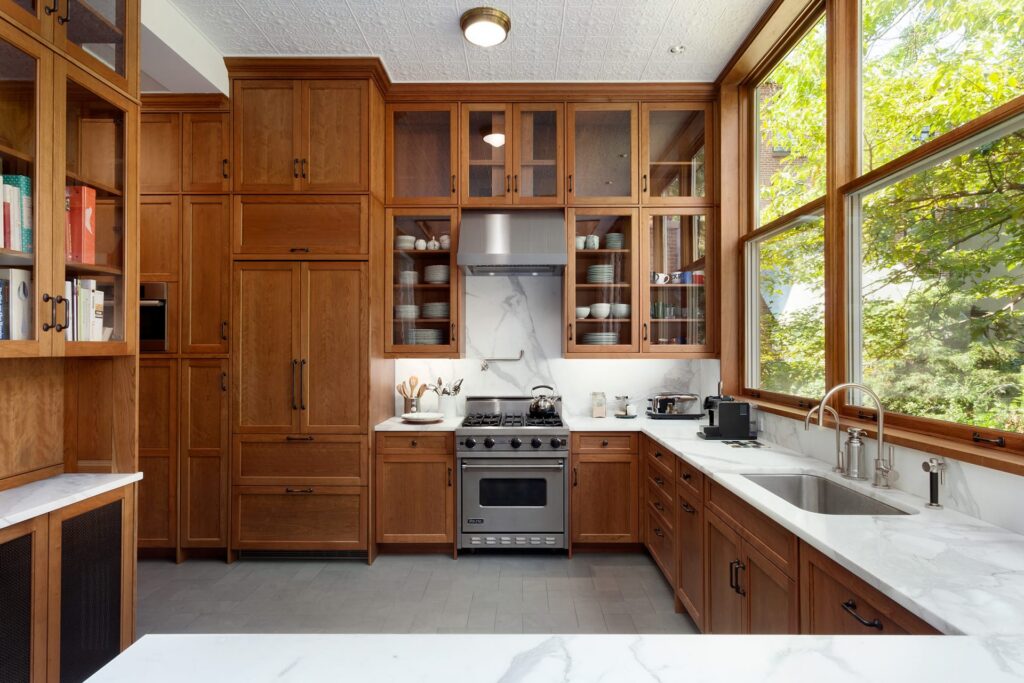
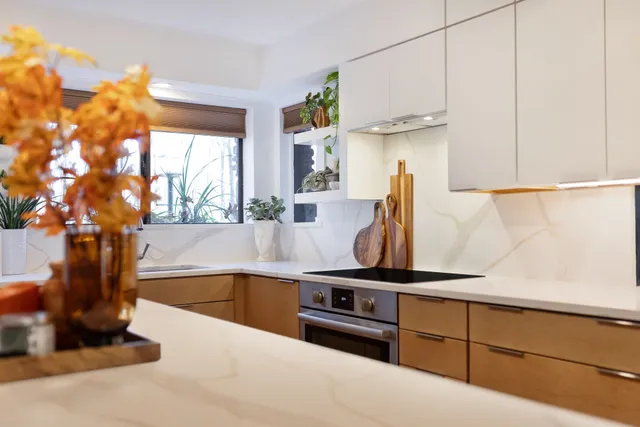
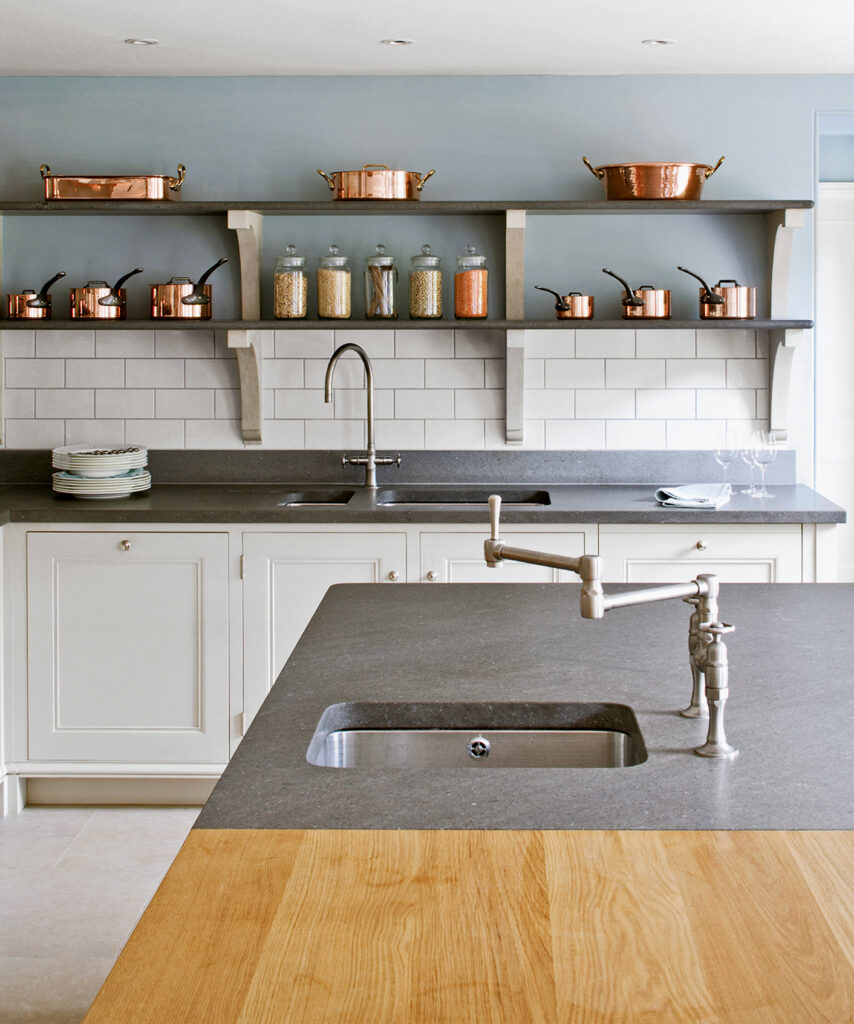
Luxury kitchens do not always need one countertop material everywhere.
In fact, some of the most thoughtful kitchens use different materials by function:
- Quartzite or marble for the main island
- Stainless steel in a prep or catering zone
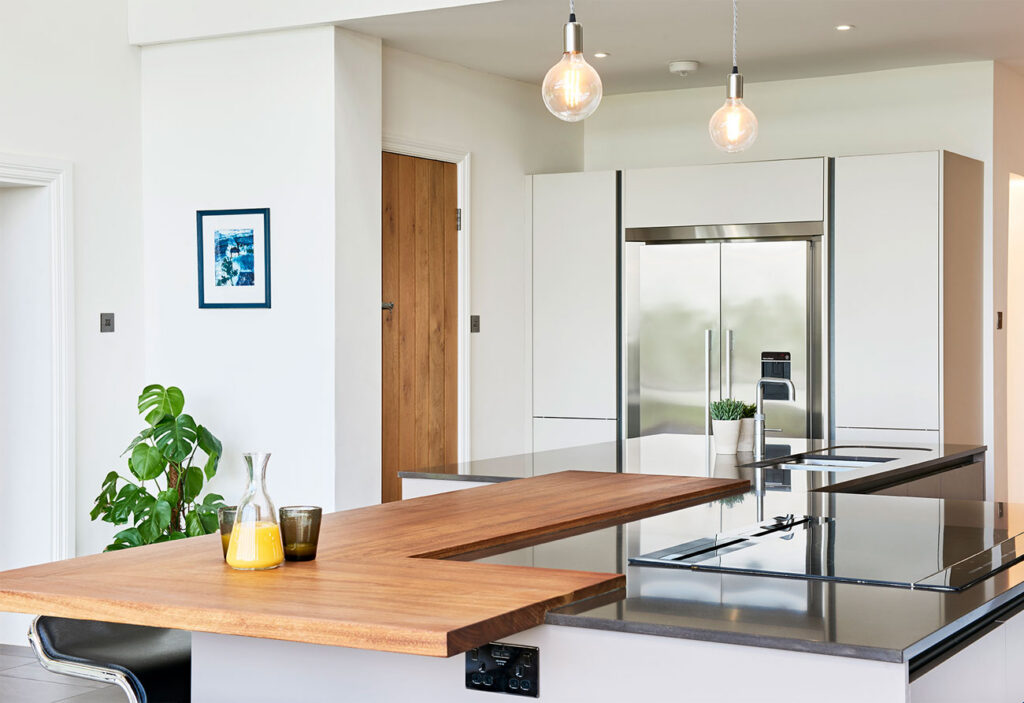
- Wood on a breakfast bar or baking table
- Porcelain slabs around a range wall
- Soapstone in a bar or pantry
- Onyx or backlit stone in a wine room or entertainment area
This approach can make the kitchen feel more custom. It also allows the homeowner to choose beauty where beauty matters most and performance where performance matters most.
Luxury Design Ideas That Make Countertops Feel More Custom
The material is only part of the decision. The details often determine whether the result feels truly high-end.
Consider these design moves:
- Full-height slab backsplash: Continuing the countertop material up the wall can create a cleaner, more architectural look.
- Bookmatched stone: Matching veining across slabs can make a kitchen feel intentional and custom.
- Waterfall island edges: Strong for modern and transitional homes when proportions are right.
- Thicker built-up edges: Can add weight and presence, especially on large islands.
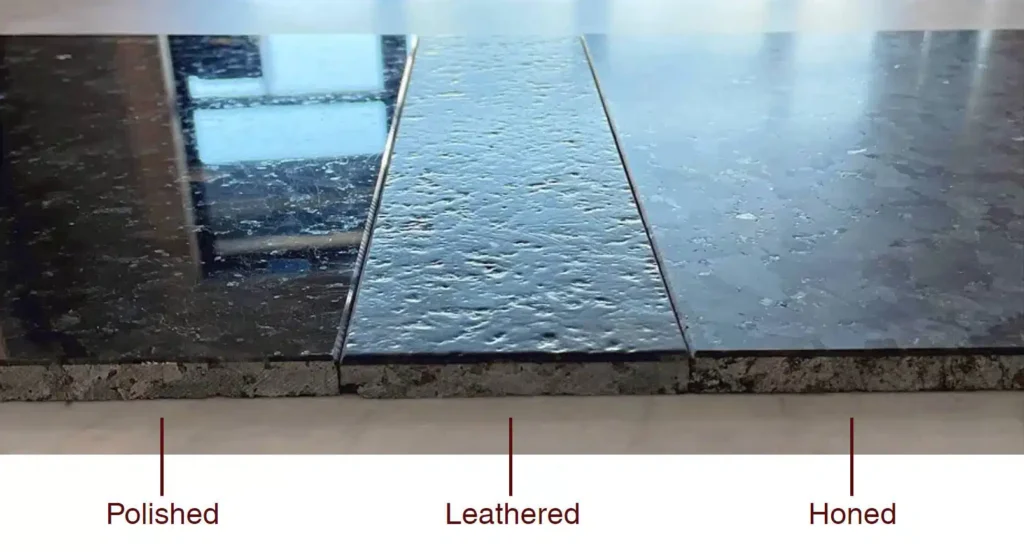
- Honed, leathered, or matte finishes: Often feel warmer and less glossy than standard polished surfaces.
➤ Polished – Glossy, smooth, and reflective. Great for showing off veining, but can be slippery.
➤ Honed – Soft matte finish with no shine. Subtle, sophisticated, and hides etching well.
➤ Leathered – Textured and tactile. Adds depth and character while masking fingerprints and water spots. - Statement island with quieter perimeter: A dramatic island can stand out without overwhelming the whole kitchen.
- Separate prep kitchen material: In larger luxury homes, a working prep kitchen can use a highly durable surface while the main kitchen carries the visual impact.
- Outdoor-compatible surfaces: For coastal Orange County homes with outdoor kitchens, UV stability, heat exposure, and maintenance should be reviewed before choosing.
This is where many homeowners get surprised: the countertop that looks best in a showroom may not be the best countertop for the architecture, light, cabinet tone, flooring, backsplash, or buyer expectations of the actual home.
Smart Questions to Ask Before Choosing a Countertop
Before committing to quartz or any alternative, luxury homeowners should ask:
- What is the material made of?
- Is it natural stone, engineered quartz, porcelain, sintered stone, solid surface, glass, or another composite?
- What is the crystalline silica content?
- Is a current safety data sheet available for the exact product?
- Who will fabricate it?
- Does the fabricator use wet cutting, dust controls, and appropriate worker-safety practices?
- Will any cutting happen on site?
- How visible will seams be?
- Can the slab be bookmatched?
- What edge profiles are realistic for this material?
- Does it need sealing?
- Can it be repaired if chipped, etched, scratched, or stained?
- Is it appropriate for outdoor use?
- Will the material feel timeless with the home’s architecture?
- How might a future buyer perceive it?
What This Means If You Are Thinking About Selling
Countertops are not just a design choice. In a luxury listing, they become part of the story buyers tell themselves about the home.
Buyers may not know the technical difference between quartz, quartzite, porcelain, sintered stone, and marble. But they often sense whether a kitchen feels custom, current, and well-considered.
A distinctive slab, clean seams, strong lighting, thoughtful edge detail, and a material that fits the architecture can help a kitchen feel more memorable. This matters even more when buyers first experience the property through photos, video, social media, livestreams, and online listing content.
Tony’s broader modern marketing approach includes professional presentation, buyer-focused content, custom real estate video production, social media exposure, open house promotion, agent communication, and consistent seller communication. For a home with a beautiful kitchen, the goal is not just to show the countertop. The goal is to help buyers understand the lifestyle, craftsmanship, and design choices behind the home.
That is why material decisions made before listing can affect more than renovation enjoyment. They may affect how confidently the home presents when it goes to market.
Helpful Resources
- OSHA overview of respirable crystalline silica and how dust is created during cutting, grinding, drilling, and crushing.
- OSHA/NIOSH hazard alert on worker exposure to silica during countertop manufacturing, finishing, and installation.
- CDC/NIOSH 2026 bulletin on engineered stone and silicosis risk for countertop fabricators.
- California Department of Public Health health advisory on silicosis cases among countertop workers.
- California Department of Industrial Relations May 2026 update on the Standards Board’s action regarding artificial stone products containing more than 1% crystalline silica.
- Safe Work Australia engineered stone ban information.
Final Thoughts
Quartz still has a place in luxury homes, but it should no longer be treated as the automatic default. The countertop market has changed. Design preferences have changed. Worker-safety awareness has changed. New low-silica and alternative surface options continue to enter the market.
For luxury homeowners, the best countertop choice is usually the one that balances beauty, performance, maintenance, material integrity, architectural fit, and long-term buyer perception.
If you are thinking about selling a home in Irvine, Newport Beach, Newport Coast, South Orange County, or nearby coastal Orange County, I would be happy to help you look at your home through a buyer’s eyes and talk through what may be worth addressing before you go on the market.
Tony Babarino
California Real Estate Broker | REALTOR®
REAL Broker
California DRE#01717758
TonyBabarino.com
Call/Text: (949) 633-6741
YouTube Channel: https://www.youtube.com/@TonyBabarino
FAQs About Countertop Alternatives for Luxury Homes
Is quartz still a good countertop material?
Quartz can still be a good countertop material for many homes. It is popular because it is consistent, durable, and generally lower maintenance than many natural stones. For luxury homes, the question is whether quartz is the most distinctive and appropriate choice compared with alternatives such as quartzite, marble, porcelain slabs, sintered stone, soapstone, or low-silica mineral surfaces.
What is the best luxury alternative to quartz?
There is no single best alternative. Natural quartzite is often a strong choice for homeowners who want a marble-like look with more durability. Porcelain and resin-free sintered stone may work well for modern kitchens, slab backsplashes, and some indoor-outdoor applications. Marble remains a classic luxury choice for homeowners who appreciate natural patina.
Are quartz countertops dangerous inside the home?
The main health concern discussed by OSHA, NIOSH, and public health agencies involves respirable crystalline silica dust created during fabrication, cutting, grinding, polishing, and installation—not typical day-to-day use of an already installed countertop. Homeowners should still ask about silica content, safety data sheets, and whether the fabricator follows proper dust-control practices.
What countertop materials have lower silica concerns?
Some low-silica mineral surfaces, certain glass-based products, stainless steel, wood, solid surface, and some newer silica-free or very-low-silica products may reduce crystalline silica concerns compared with traditional engineered quartz. However, homeowners should verify the exact product composition and current safety data sheet instead of relying on broad category labels.
Is natural stone better than quartz for resale?
Not always. Natural stone can feel more custom and distinctive, especially in luxury homes, but the best resale choice depends on the home’s architecture, buyer expectations, maintenance needs, and installation quality. A poorly chosen expensive stone can hurt the design, while a well-selected surface can make the kitchen feel more intentional and memorable.
What should Irvine and Newport Coast homeowners consider before replacing countertops?
Homeowners in Irvine, Newport Beach, Newport Coast, and coastal Orange County should consider lifestyle, indoor-outdoor living, buyer expectations, fabrication quality, maintenance, and how the material will present in photos and video if the home is later sold. In higher-end homes, buyers often notice whether kitchen materials feel current, custom, and consistent with the rest of the property.
This article is for general educational information only and is not legal, health, safety, construction, environmental, warranty, financial, or professional design advice. Countertop performance, safety requirements, fabrication practices, silica content, maintenance needs, and suitability vary by product, property, installer, and current regulations. Always review current product safety data sheets and consult qualified fabricators, designers, contractors, and appropriate licensed professionals before making decisions. If your property is currently listed or you are already represented by another real estate broker, this is not intended as a solicitation.